
Last updated October 17, 2026
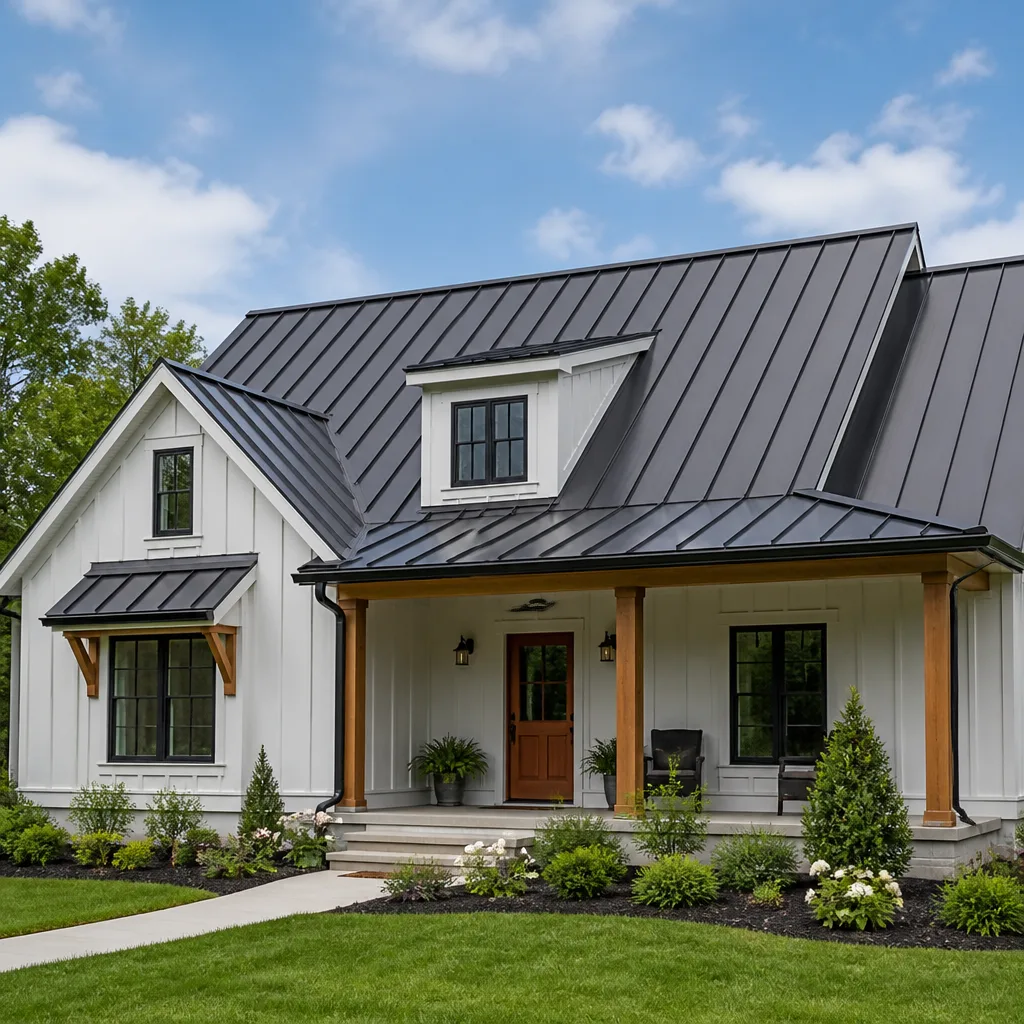 Metal roofing
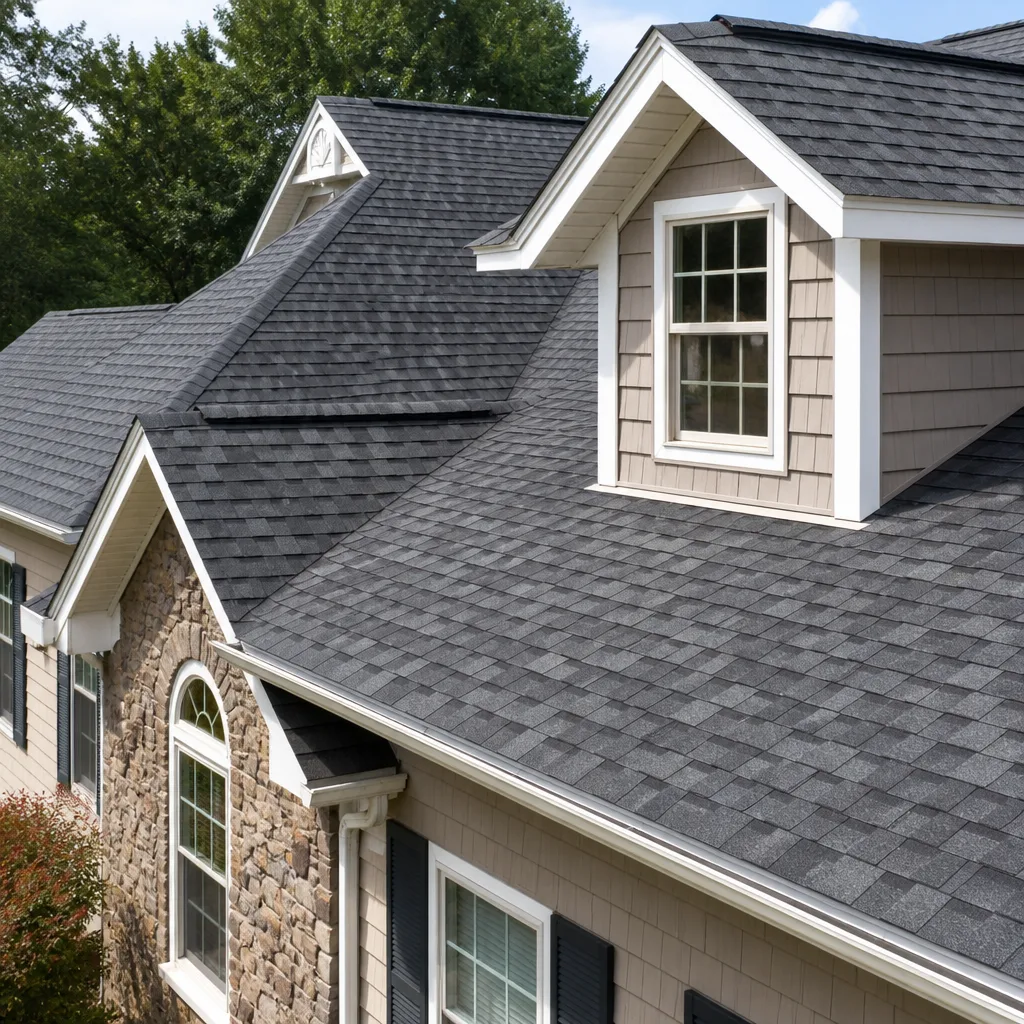 Architectural shingles
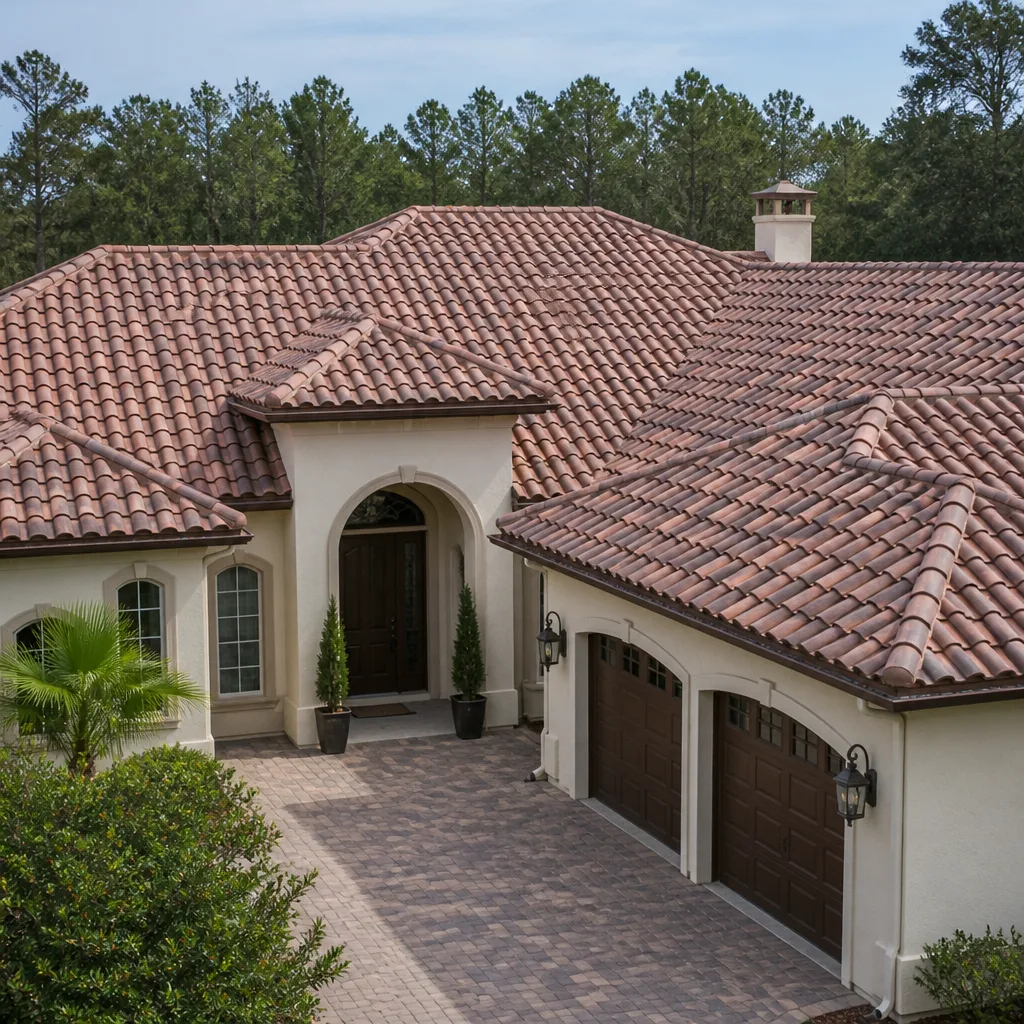 Tile roofing
 GAF
GAF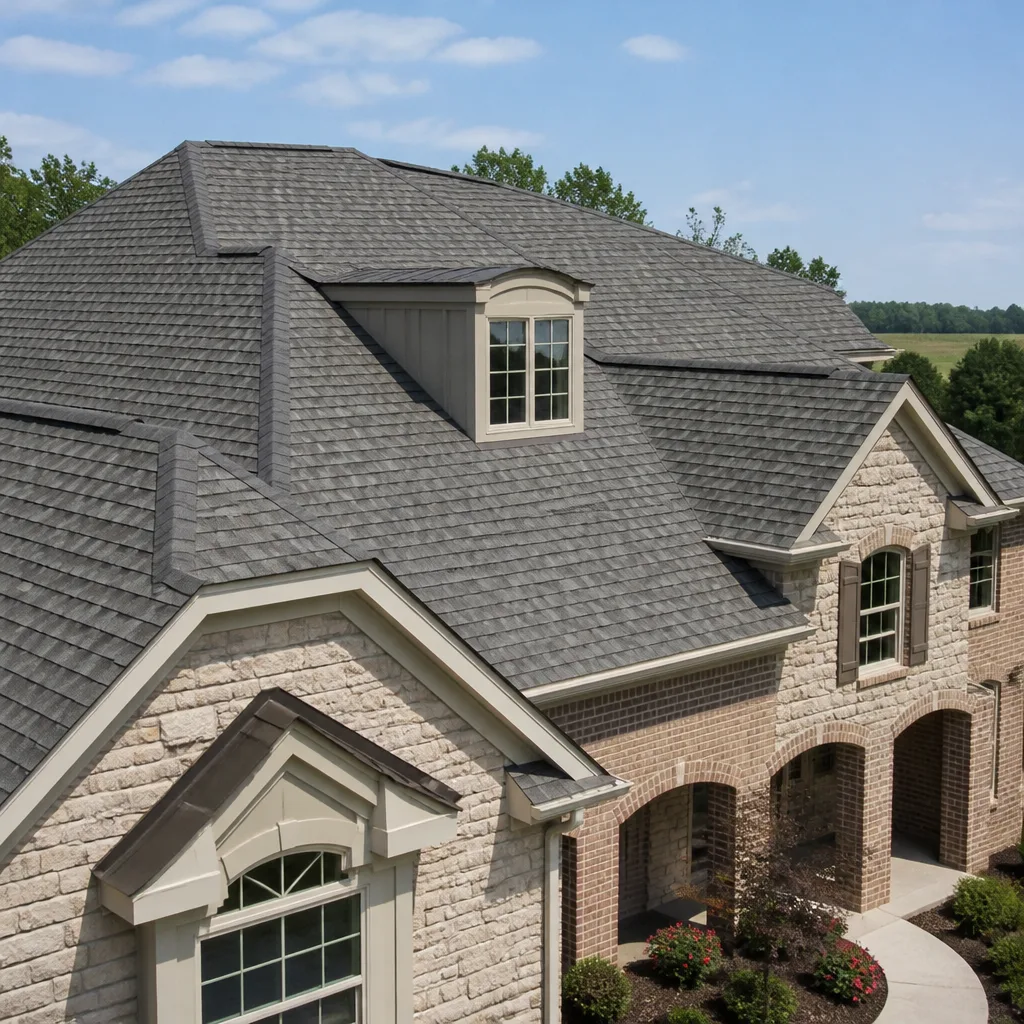 Owens Corning
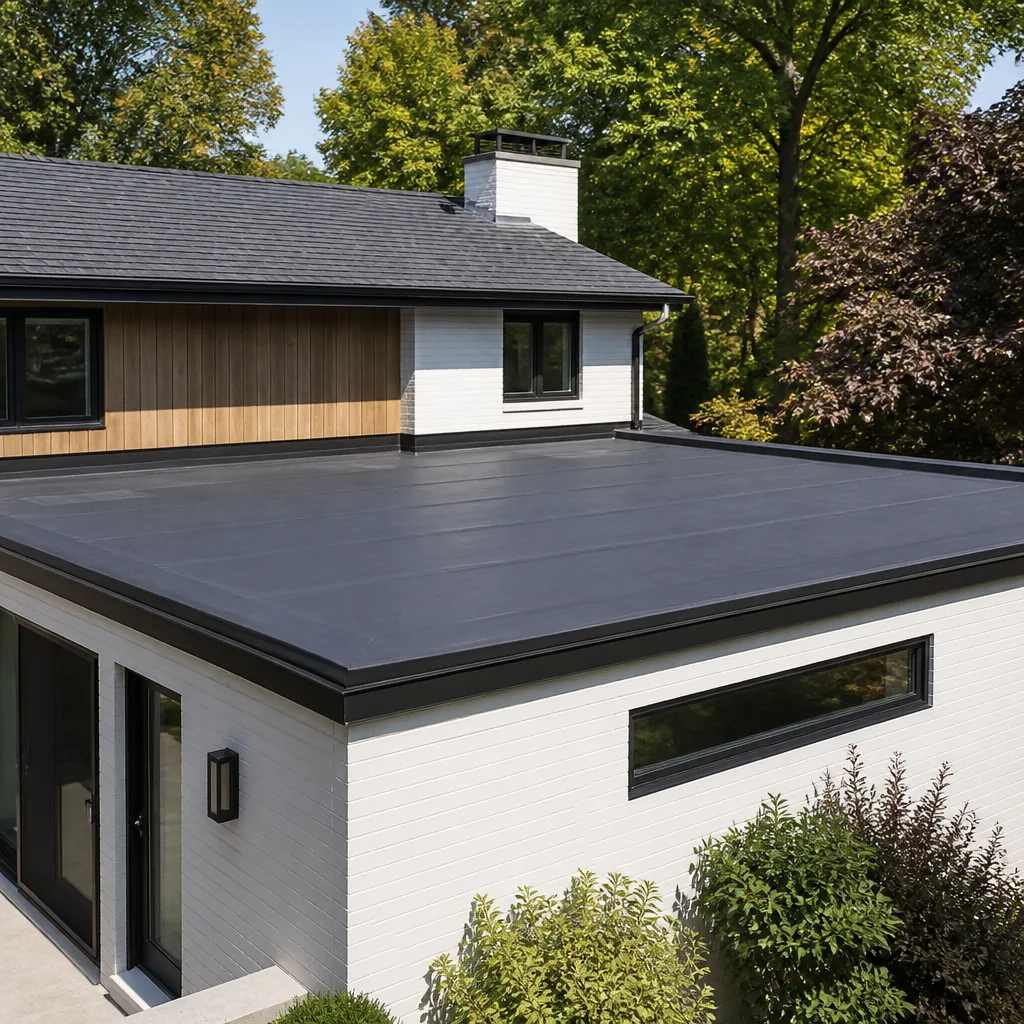 Flat & low-slope
Free roof inspection with deck photos before we talk money - GAF and Owens Corning certified installation
How to Hire a Roofing Contractor in Los Angeles: A Step-by-Step Guide
Here’s a number that should stop you cold: the California Contractors State License Board suspended or revoked more than 1,700 roofing-related licenses in a recent 24-month period. That’s 1,700 homeowners who signed contracts with a company that looked legitimate on paper and wasn’t. The frustrating part? Checking a license number on the CSLB website takes about 90 seconds, and almost nobody in Los Angeles does it before signing. This guide walks you through the entire hiring process, from that first license check to the final walkthrough, so you know exactly what separates a contractor who stands behind the work from one who disappears after the deposit clears.
Quick Answer
To hire a roofing contractor in Los Angeles, verify the company holds an active C-39 roofing license with a current bond on the CSLB website, get written quotes from at least three contractors with matching line items, confirm the written contract includes the 3-day right of rescission and a deposit cap of 10% or $1,000 (whichever is less), and walk the roof with each bidder before comparing prices. For a detailed Roofing Cost Breakdown: The Los Angeles Homeowner’s Reference for 2026, expect most asphalt-shingle roof replacements in Los Angeles to run between $12,000 and $22,000 depending on size, pitch, and tear-off requirements.
Styles & brands we work with
Table of Contents
- Step 1: Verify the License on the CSLB Website
- Red Flags in the Los Angeles Roofing Market
- Schedule a Legitimate Pre-Job Walkthrough
- How to Compare Quotes Side-by-Side
- What Your Written Contract Must Include Under California Law
- Choosing Materials: What Actually Matters in LA’s Climate
- Questions to Ask Every Contractor Before You Sign
- Common Mistakes to Avoid
Step 1: Verify the License on the CSLB Website
The single most predictive step you can take in Los Angeles happens before you ever meet a contractor. California requires any roofing contractor working on a project valued at $500 or more to hold a C-39 roofing classification from the Contractors State License Board. A general contractor license is not enough. A handyman with a B license quoting your roof is not legal for that scope of work.
Here’s the step-by-step process we recommend to every homeowner who calls Tilehurst Roofing Los Angeles:
- Go to the CSLB website and click “Check a License.” You’ll need either the license number or the business name exactly as it appears on the license.
- Confirm the classification is C-39. The license detail page will list classifications. If you see “C-39 Roofing” in the list, the contractor is legally permitted to roof. If you only see “B General Building” or “C-15 Flooring,” they cannot legally perform roofing work in California.
- Check the license status says “Active.” Statuses like “Suspended,” “Revoked,” or “Expired” mean the contractor cannot legally work. You’d be surprised how many companies in Los Angeles quote jobs on a suspended license and hope you never check.
- Verify the bond amount is current. Look for the “Bonding” section on the license detail page. California requires a $25,000 contractor’s bond at minimum. If the bond field is blank or shows “Canceled,” walk away. The bond is your financial recovery path if the contractor abandons the job or violates state law.
- Confirm the license holder’s name matches who you’re actually talking to. Some companies use a valid license number that belongs to someone else entirely. Ask the salesperson to confirm the qualifier on the license is the same person who will sign your contract.
- Check for workers’ compensation insurance. The CSLB page shows whether the contractor carries workers’ comp coverage. Roofing is one of the highest-risk trades in construction. If a worker falls off your roof and the contractor lacks coverage, your homeowner’s policy can be on the hook. In our experience, roughly one in four license checks reveals an issue the homeowner never saw coming.
Red Flags in the Los Angeles Roofing Market
Los Angeles has one of the most competitive roofing markets in the country, and that competition attracts a specific kind of operator. These aren’t subtle red flags. They’re patterns we see repeat in neighborhoods from the Valley to the Westside every single season.
- Door-knockers after wind events. Every Santa Ana wind season, crews sweep through Los Angeles neighborhoods offering “free inspections” and finding emergency damage that needs immediate work. Legitimate roofing companies in Los Angeles don’t canvass. If someone knocks on your door uninvited and says your roof is failing, get a second opinion before you sign anything.
- “Today only” pricing. A real estimate takes time to prepare. It’s based on measurements, material prices, tear-off requirements, and access conditions. Any contractor who says the price is only good if you sign today is manufacturing urgency that doesn’t exist. In our experience, products from manufacturers like Owens Corning, IKO, and Atlas don’t change price day-to-day. A quote that expires in 24 hours isn’t a quote; it’s pressure.
- Asking you to pull your own permit. In Los Angeles, the contractor is legally responsible for obtaining the building permit. If a roofer asks you to pull the permit “to save money,” they’re either unlicensed, trying to hide the job from the city, or both. When a contractor pulls the permit, the work gets inspected. When you pull the permit, you become the responsible party for failed inspections and uncorrected work.
- No physical address on the quote. We’ve seen “contractors” in Los Angeles working out of a rented mailbox and a cell phone. Before you sign, confirm the company has a real office or a legitimate mailing address that matches public records. It’s not a guarantee of quality, but the absence of one is nearly a guarantee of trouble.
- Names that change with the phone number. This is a Los Angeles classic. The same crew operates under four different business names, swapping names after bad reviews pile up. Check how long the business has been established, and search the owner’s name on CSLB and Google. If the owner has a history of dissolved companies, that’s a pattern you should not ignore.
Schedule a Legitimate Pre-Job Walkthrough
There’s a direct line between whether a contractor walks the roof and whether their estimate holds up. Contractors who quote from the curb in Los Angeles are doing something we call a “drive-by estimate” – they’ll look at the roof from the street or from the ladder at the eave, punch some numbers into an app, and hand you a price. That price is a guess. Here’s what a legitimate pre-job walkthrough looks like versus what should make you uneasy.
A real walkthrough includes:
- Getting on the roof to inspect the actual surface. A legitimate contractor needs to see the current shingle condition, the decking underneath, the flashing at penetrations, and the ridge line. A roof that looks fine from the street can have rot at the pipe penetrations or failed flashing at the valleys. You have to be on it to see it.
- Measuring the actual square footage. Not approximating from the curb, not using satellite imagery and calling it good. The roofer should physically measure the roof to calculate materials accurately. Satellite estimates are often off by 10% to 15%, and that error lands on your bill.
- Checking the attic. If your home has accessible attic space, a thorough contractor will go inside to inspect the underside of the decking for water staining, delamination, or previous leaks that haven’t shown up on the ceiling yet. The attic tells the truth about how the roof has been performing.
- Walking the perimeter to inspect drip edge, gutters, and drainage. Water damage in Los Angeles rarely starts with a dramatic leak. It starts with a drip edge that was never installed, or a gutter that’s been overflowing for three years, or downspouts that don’t move water away from the foundation.
- Taking photos of everything. A contractor who documents the walkthrough with photos can explain what they found and why they’re recommending what they’re recommending. You should never sign a contract based on a verbal description of roof conditions. You should see the evidence.
What a curb quote looks like: the contractor never leaves the driveway, never opens the attic access, never puts a ladder on the roof. The estimate arrives with no measurements, no material breakdown, and no mention of flashing or underlayment. It’s a number with no basis. In our experience guiding homeowners through the hiring process at our Roofing Company in Los Angeles, the difference between a curb quote and a real walkthrough is often the difference between a final bill that matches the estimate and one that doesn’t.
How to Compare Quotes Side-by-Side
The reason most homeowners can’t tell whether they’re getting a fair price is that the quotes they receive aren’t built with matching line items. One contractor budgets for new flashing, another assumes they’ll reuse what’s there. One includes permit fees, another makes them your responsibility. When the quotes aren’t comparable, the comparison is false.
Here’s the framework we recommend for reading two or three quotes side-by-side in Los Angeles:
- Square footage of the roof measured. Every quote should list the actual roof square footage they measured. If one quote says 2,400 square feet and another says 2,100, someone didn’t measure. Ask which is right.
- Tear-off and disposal cost. If you’re getting a full replacement, the old roof has to come off. A quote that doesn’t include tear-off, hauling, and dump fees isn’t complete. In Los Angeles, disposal costs have risen steadily, and that line item matters.
- Decking replacement allowance. Any roofer in Los Angeles has pulled back shingles to find rotted or delaminated decking. The quote should specify the cost per sheet of decking if replacement is needed beyond what was visible during the walkthrough. Without a per-sheet allowance, that cost is unbounded.
- Underlayment type and brand. Underlayment is the waterproofing layer between the decking and the shingles. The quote should say exactly what’s going on: synthetic underlayment from a named manufacturer, or a specific grade of felt. “Premium underlayment” without a brand or type is not a line item.
- Flashing scope. Flashing is the metal that seals the joints where roof planes meet walls, chimneys, skylights, and pipe penetrations. The quote should say whether flashing is being replaced or reused. Reusing old flashing on a new roof is common in Los Angeles and is usually a mistake.
- Permit and inspection fees. In the City of Los Angeles, a re-roof permit is required. The quote should clearly state whether permit fees are included. LADBS fees run in the hundreds depending on project scope, and if the quote doesn’t list them, you’re paying them on top.
- Manufacturer warranty registration. The quote should say which manufacturer’s system is being installed and whether the warranty is being registered in your name. An unregistered warranty is no warranty at all.
When all these line items appear on every quote you receive, the comparison is actually meaningful. You can see whether one contractor is simply underpricing the job by skipping flashing or underlayment, or whether the floor is fair. In our experience, the quote that’s dramatically lower always has a missing line item behind it.
What Your Written Contract Must Include Under California Law
California has some of the strongest contractor protection laws in the country, but they only work if the contract is written correctly and you know your rights before you sign. Here’s what must be in your written contract before any roofing work begins in Los Angeles:
- The contractor’s name, license number, and business address. This should match the CSLB license exactly. If the name on the contract doesn’t match the license, the contract is not enforceable against the licensed entity.
- A detailed description of the work to be performed. This should match the line items from the quote: square footage, materials with manufacturer names, tear-off, decking allowance, underlayment, flashing, drip edge, ridge cap, and cleanup.
- The total contract price and payment schedule. Under California law, a contractor cannot demand or accept a down payment of more than 10% of the contract price or $1,000, whichever is less, for residential work. If a roofer in Los Angeles asks for 50% upfront, they’re violating state law and telling you something about how they operate.
- A 3-day right of rescission notice. California Business and Professions Code requires that every home improvement contract include a notice that you have three business days to cancel without penalty. The notice must be in the contract, and it must be in at least 12-point bold type. If it’s not there, the contract is not compliant.
- A schedule of progress payments. Any payments beyond the initial deposit should be tied to specific milestones, not dates. “50% when tear-off is complete and materials are delivered” is tied to work. “50% on the 15th” is tied to a calendar. You want the first version.
- The permit responsibility. The contract should state that the contractor will obtain the permit and schedule inspections. In Los Angeles, this matters more than in many cities because LADBS inspections are a key protection against substandard work.
- The workmanship warranty in writing. Not a verbal promise. A written warranty that says what’s covered and for how long. If the contract doesn’t include a written guarantee on the repair or replacement, you are relying on nothing.
One thing we tell every homeowner at Roof Repair in Los Angeles is that the written guarantee is the floor, not a premium add-on. The guarantee should be delivered before the crew leaves, not mailed later. If a contractor won’t put the warranty in the contract, don’t sign the contract.
Choosing Materials: What Actually Matters in LA’s Climate
Los Angeles weather doesn’t punish roofs the way Minnesota winters or Florida hurricane seasons do. What Los Angeles does is slow, steady damage: months of UV exposure that degrades shingle granules, Santa Ana winds that lift edges and drive debris across the surface, and long dry spells followed by sudden heavy rain that finds every weak seam. The material choice matters more than most homeowners think, and it should be a conversation, not a default.
We work with seven manufacturers including GAF, CertainTeed, Owens Corning, IKO, Atlas, Tamko, and Boral because the product should fit the home, not just what happens to be in the truck. For a mid-century ranch in the Valley, a classic asphalt shingle from Owens Corning or Tamko fits the architecture and the budget. For a Spanish-style home in the foothills, a Boral concrete or clay tile keeps the look intact and handles the heat load. For a coastal property in the South Bay that gets salt air and wind, upgraded underlayment from a premium line matters more than the shingle color.
Here’s what we cover in every material conversation:
- Wind rating. In Los Angeles, especially in the foothills and passes where Santa Ana winds channel, the shingle’s wind warranty matters. Some products from Atlas and IKO carry high-wind warranties that a standard three-tab shingle simply doesn’t.
- UV resistance. Shingle granules absorb and reflect sunlight. Higher-quality shingles hold their granules longer under sustained exposure. That’s a real degradation difference over 15 to 20 years in Los Angeles.
- Fire rating. California building code requires Class A fire-rated roofing in most of Los Angeles, especially in high-fire-risk zones in the hills. The material you choose has to meet the code for your specific neighborhood.
- Weight and structural compatibility. Concrete tile is heavy. If your home was built for asphalt shingles, putting Boral tile on the roof may require structural reinforcement. A legitimate contractor will check the framing before quoting a tile roof.
- Warranty registration. Manufacturer warranties only apply if installed by a certified contractor and registered correctly. Ask if the contractor is certified with the manufacturer whose product they’re quoting.
You don’t need to become a roofing engineer. You need to ask the right questions and listen for answers that show the contractor has thought about your specific home in your specific Los Angeles microclimate, not just what’s stacked in the warehouse.
Questions to Ask Every Contractor Before You Sign
These are the questions that separate the serious operators from the ones who will no-show on the day the job starts. Ask every single one of them, and pay attention to how the contractor responds. Someone who gets annoyed at questions is someone who doesn’t want you asking them.
- “Can I see your CSLB license and your bond information?” A legitimate contractor will show you or tell you exactly how to look it up. A contractor who deflects is already telling you something.
- “Who will be on my roof every day?” Are they employees or subcontractors? Background-checked and uniformed, or day labor picked up from a corner? The answer matters because the people on your roof have access to your home.
- “What happens if I find a problem after the job is done?” A contractor who says “call us and we’ll come back” without a written guarantee is giving you a promise with no structure. Ask specifically what the guarantee covers and for how long.
- “Will the price be in writing before any work starts?” If the answer is anything other than “yes, every time,” walk away. A written price before work begins is non-negotiable.
- “What’s your process if the repair fails within the first year?” This is the question almost nobody asks and everyone should. You want to hear that they’ll return at no charge inside the guarantee period. You want it in writing.
- “Who pulls the permit, and is the inspection included?” The contractor pulls the permit. The inspection is scheduled with the city. The homeowner should never be the responsible party for either.
- “Will you walk the roof with me before we sign?” A contractor who’s willing to walk the roof and show you photos of what they found is a contractor who’s basing the estimate on evidence. A contractor who won’t is giving you a guess.
Common Mistakes to Avoid
- Hiring the first contractor who returns your call. The Los Angeles roofing market rewards patient buyers. Get three quotes. If one company can start tomorrow and two are booked for three weeks, that should be information, not a tiebreaker.
- Signing a contract with an incomplete scope of work. If the contract says “re-roof house” and nothing else, you haven’t agreed on anything specific. The scope should reference every line item from the quote.
- Paying more than the legal deposit cap. California caps the deposit at 10% or $1,000, whichever is less. Anyone asking for more is violating state law, full stop.
- Skipping the permit. An unpermitted roof in Los Angeles becomes a problem the day you sell the house. Lenders and buyers both ask, and unpermitted work can kill a sale or force a retroactive permit at a much higher cost.
- Choosing the lowest quote without checking what’s missing. The lowest quote in Los Angeles is almost always missing flashing, underlayment, permit fees, or decking allowance. Find the discrepancy before you sign, not after the change order arrives.
- Assuming the manufacturer warranty covers workmanship. It doesn’t. The manufacturer warranty covers the product. The contractor’s written warranty covers the workmanship. You need both, and they cover different things.
- Not verifying workers’ compensation insurance. If the crew isn’t covered and someone falls, your homeowner’s insurance is on the hook. Never let a contractor work on your roof without verifying workers’ comp coverage through the CSLB site.
See the difference
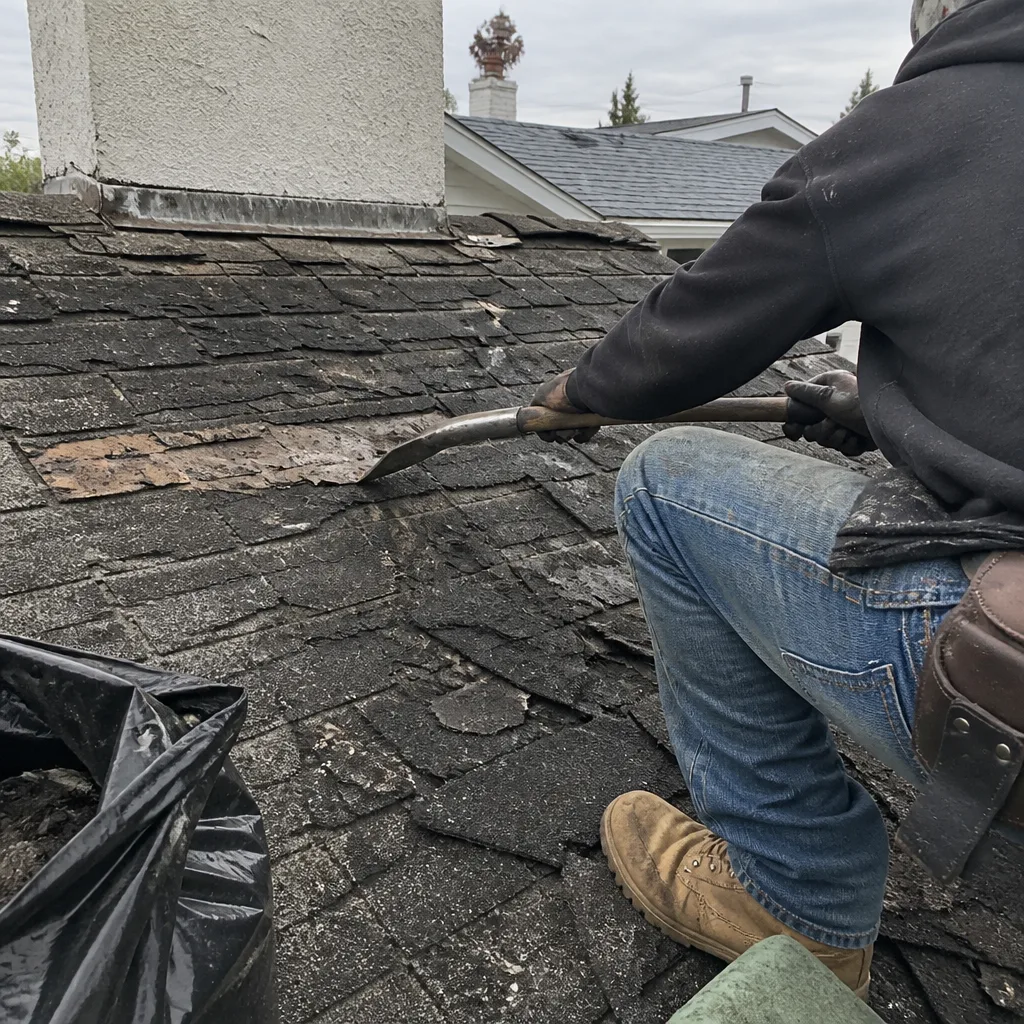 Before
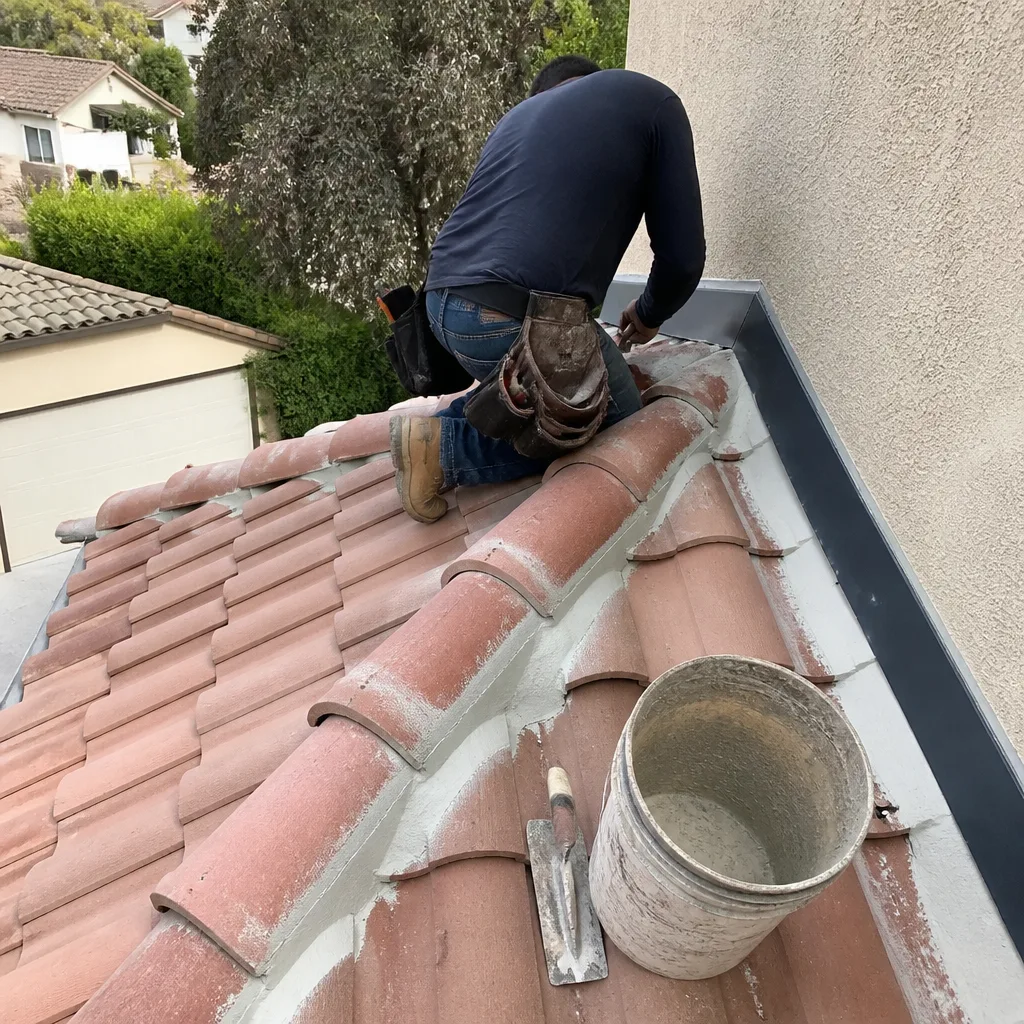 After
After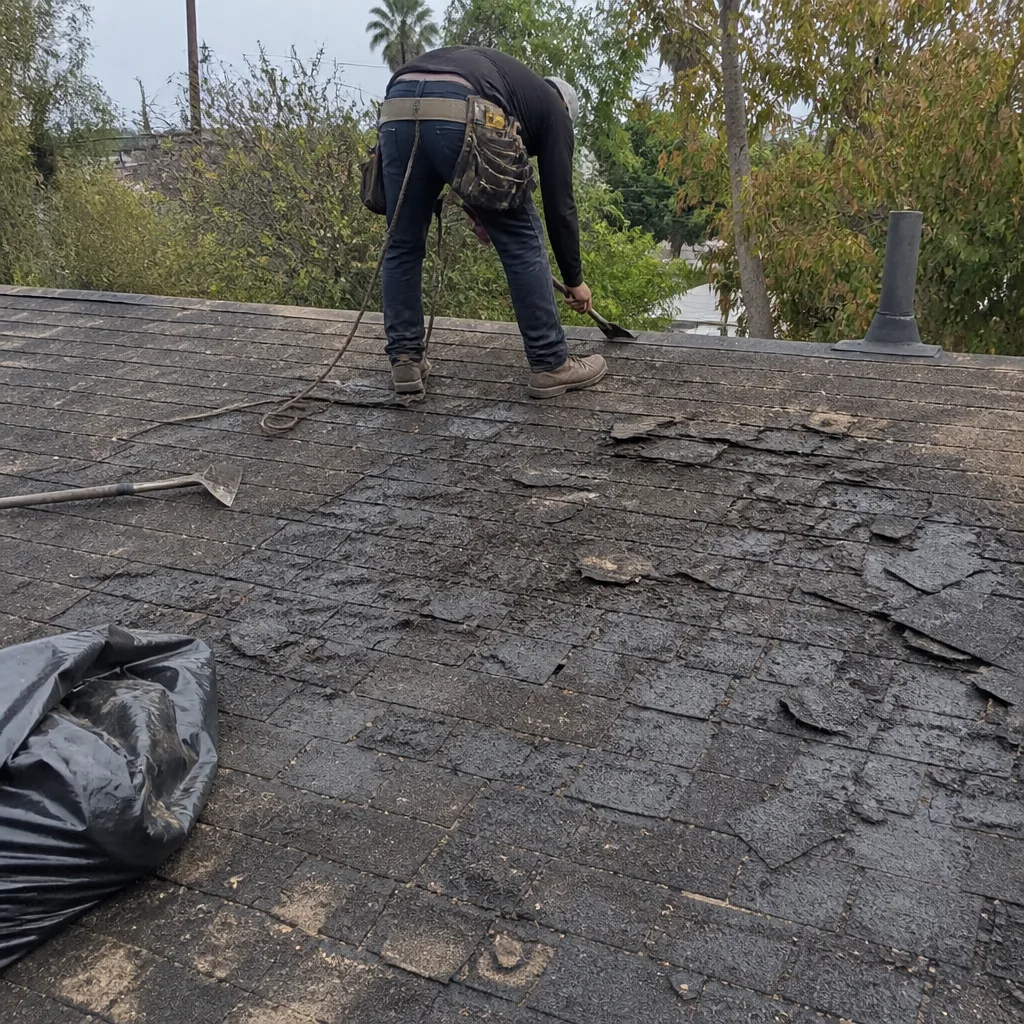 Before
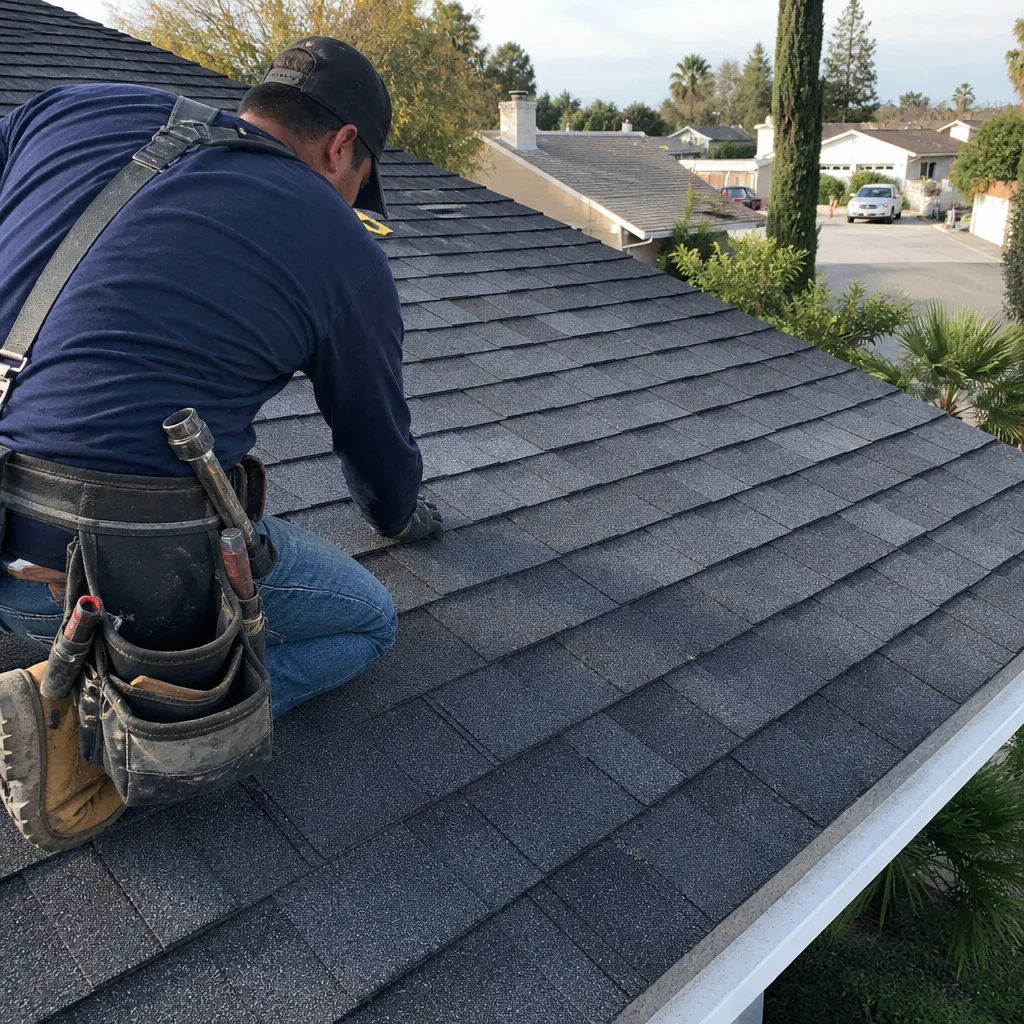 After
After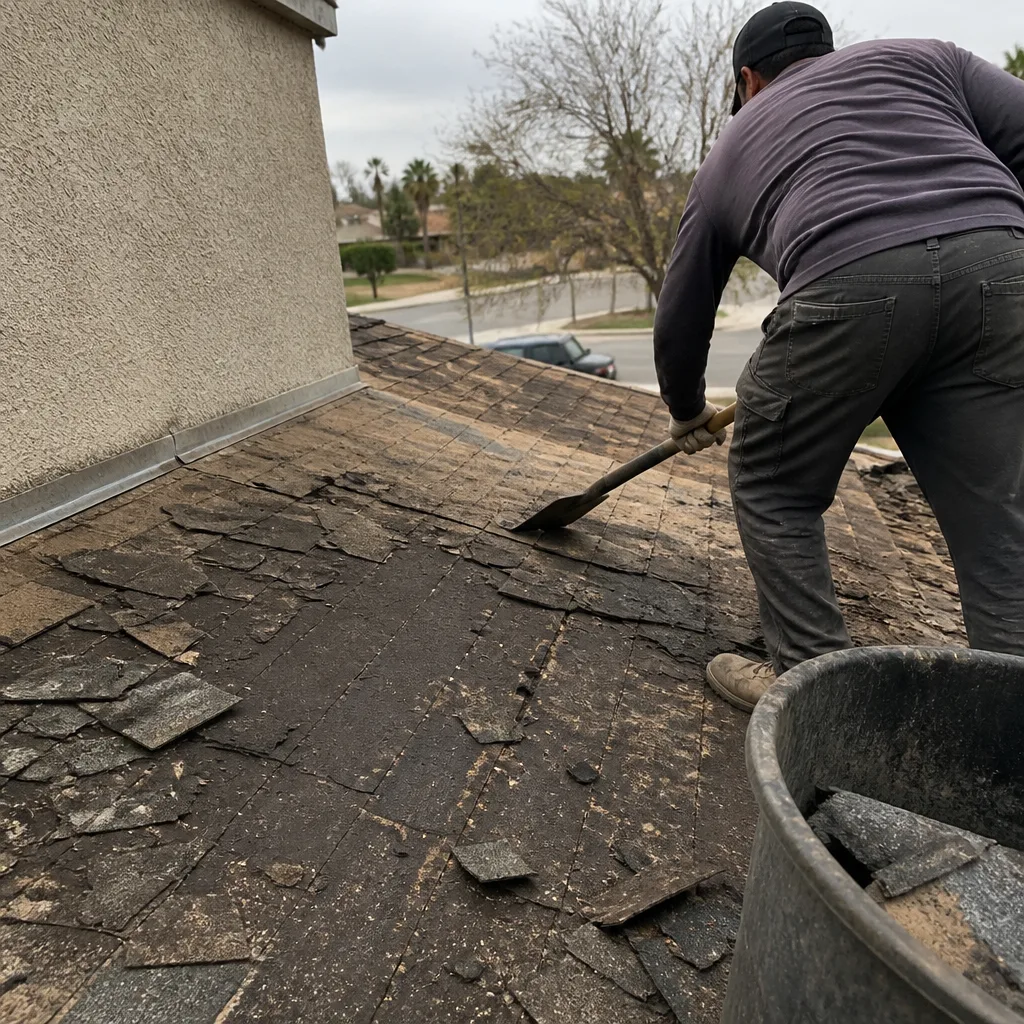 Before
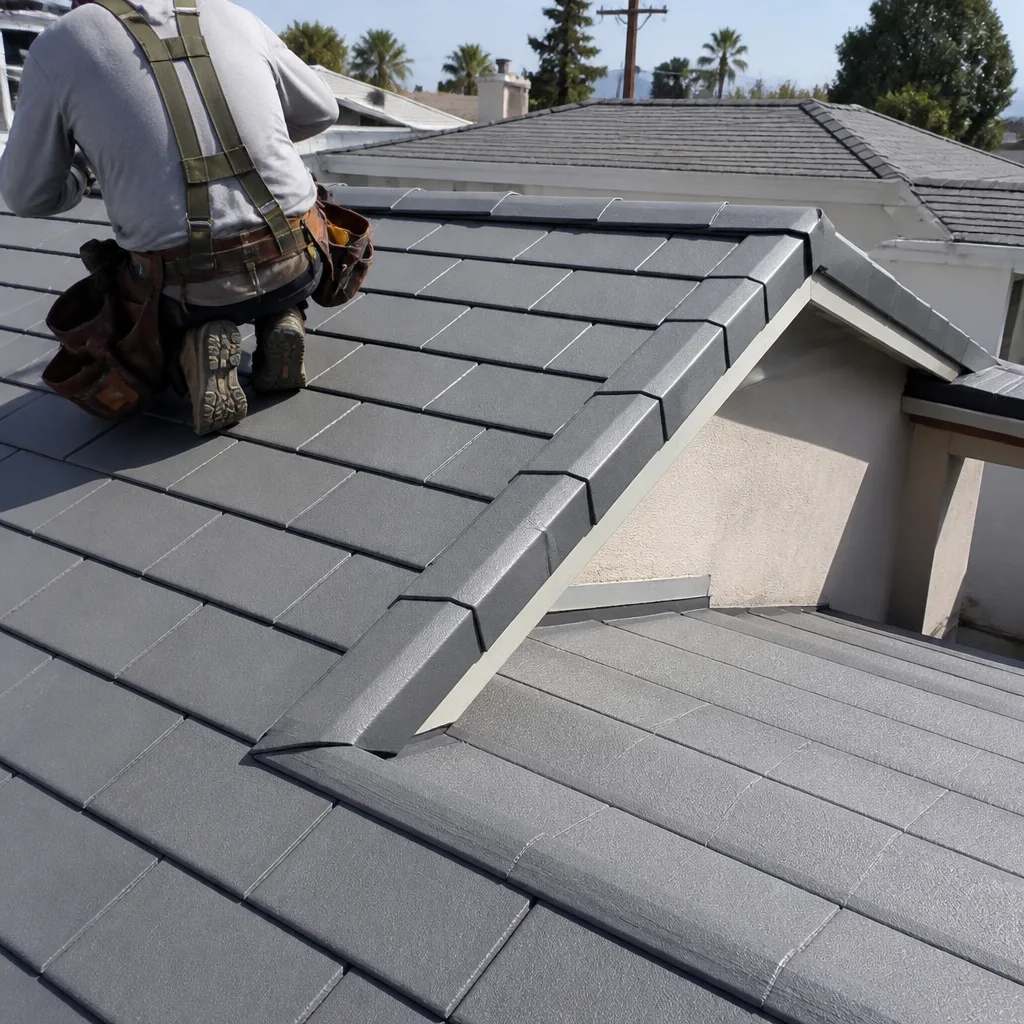 After
AfterWhen to Call a Professional
Some situations don’t belong on your to-do list for next week. If you see water stains on the ceiling, if shingles are missing after a storm, if the roof is leaking during rain, or if the decking feels soft when you walk in the attic, call a professional now. Delays in Los Angeles turn small leaks into decking rot, which turns a repair call into a replacement project. If you’re not sure whether you have a problem, call anyway – a good roofer will tell you honestly if the roof has years left, and you can find Roofing Company Maintenance Checklist for Los Angeles Homeowners and other resources on our site. Tilehurst Roofing Los Angeles offers free estimates in Los Angeles. Call (213) 674-2890 to schedule yours.
Frequently Asked Questions
Most asphalt-shingle roof replacements in Los Angeles run between $12,000 and $22,000 depending on the square footage, roof pitch, number of stories, tear-off requirements, and material grade. A premium shingle from Atlas or IKO on a two-story home with a steep pitch will land higher; a mid-grade shingle on a single-story ranch will land lower. Call (213) 674-2890 for a written quote specific to your roof.
Check the contractor’s license on the Contractors State License Board website by searching the license number or business name and confirming the classification includes C-39 Roofing, the status is Active, the bond is current, and workers’ compensation insurance is on file. If any of those items is missing, the contractor is not legally able to roof your home in Los Angeles.
Not without a written change order that you sign. If the contract includes a per-sheet decking allowance and the permit is included, the final price should match the written quote. The only legitimate additions are for discoveries that weren’t visible during the walkthrough, like rotted decking under the shingles, and those should be priced per sheet in the original contract.
Most residential roof replacements in Los Angeles take three to five working days from tear-off through final inspection, depending on roof size, pitch, and weather. A roof repair typically takes one day. The permit inspection is typically scheduled within a few days of completion.
The manufacturer warranty covers the roofing product itself – shingles that fail, delaminate, or lose granules prematurely. The workmanship warranty covers the installation – seams that leak, flashing that fails, underlayment that was misapplied. In Los Angeles, you need both in writing before the job starts. Tilehurst Roofing Los Angeles puts a written guarantee on every repair and delivers it before the crew leaves.
Yes. The Los Angeles Department of Building and Safety requires a permit for full roof replacements and significant repairs. The contractor, not the homeowner, should be the one to obtain the permit and schedule the inspection. An unpermitted roof creates problems at resale and can trigger retroactive permit fees and correction costs. For more guides & resources on protecting your investment, visit our blog.
The Bottom Line
Hiring a roofing contractor in Los Angeles comes down to verification, written specificity, and the willingness to walk away when the answers don’t match the law. Check the C-39 license and bond on CSLB. Get three quotes with matching line items. Demand a written contract that includes the 3-day right of rescission, a deposit cap of 10% or $1,000, and a written workmanship guarantee. Walk the roof with every bidder. If a contractor resists any of those steps, that resistance is your answer. Roof Replacement in Los Angeles is a significant investment, and the process you use to hire matters as much as the product you choose.
Written by Greg Holloway, Owner at Tilehurst Roofing Los Angeles, serving Los Angeles since 2000. Learn more at the Tilehurst Roofing Los Angeles home page.