
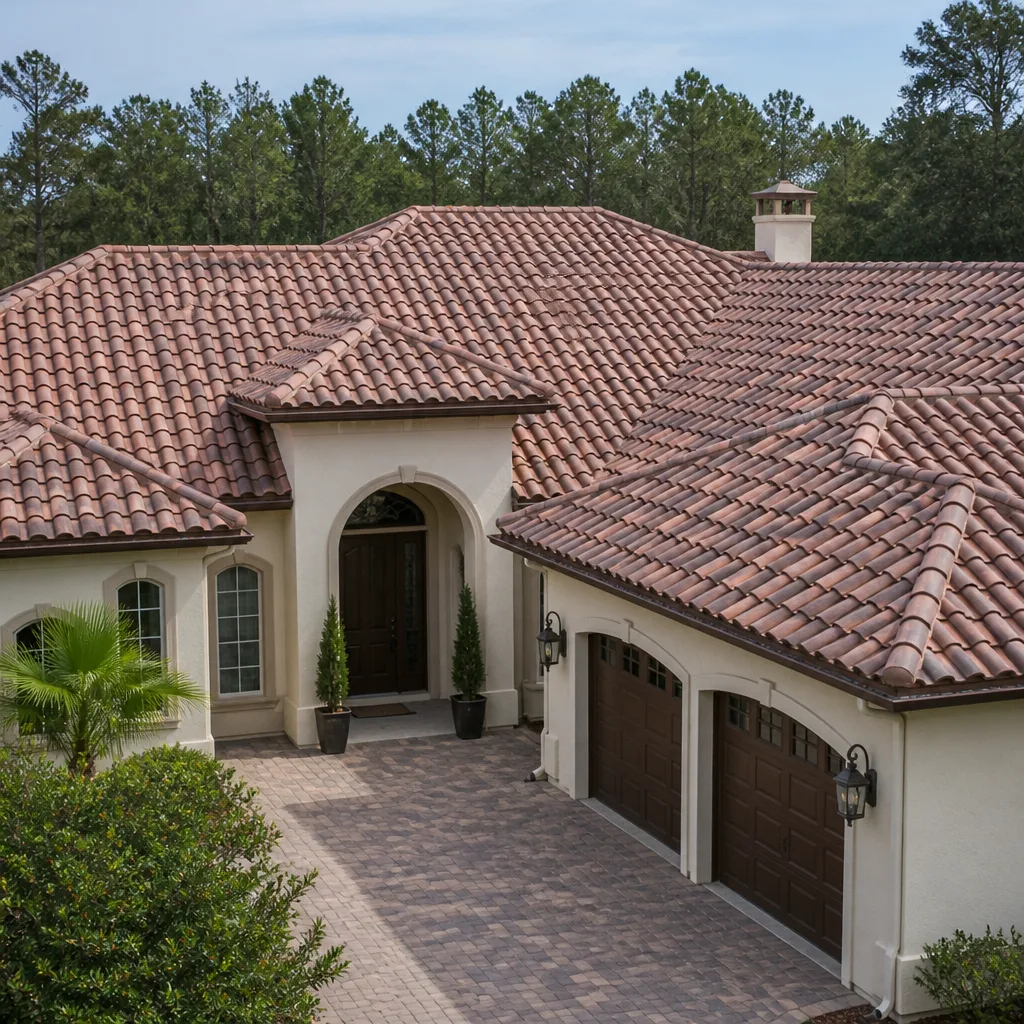
 Tile roofing
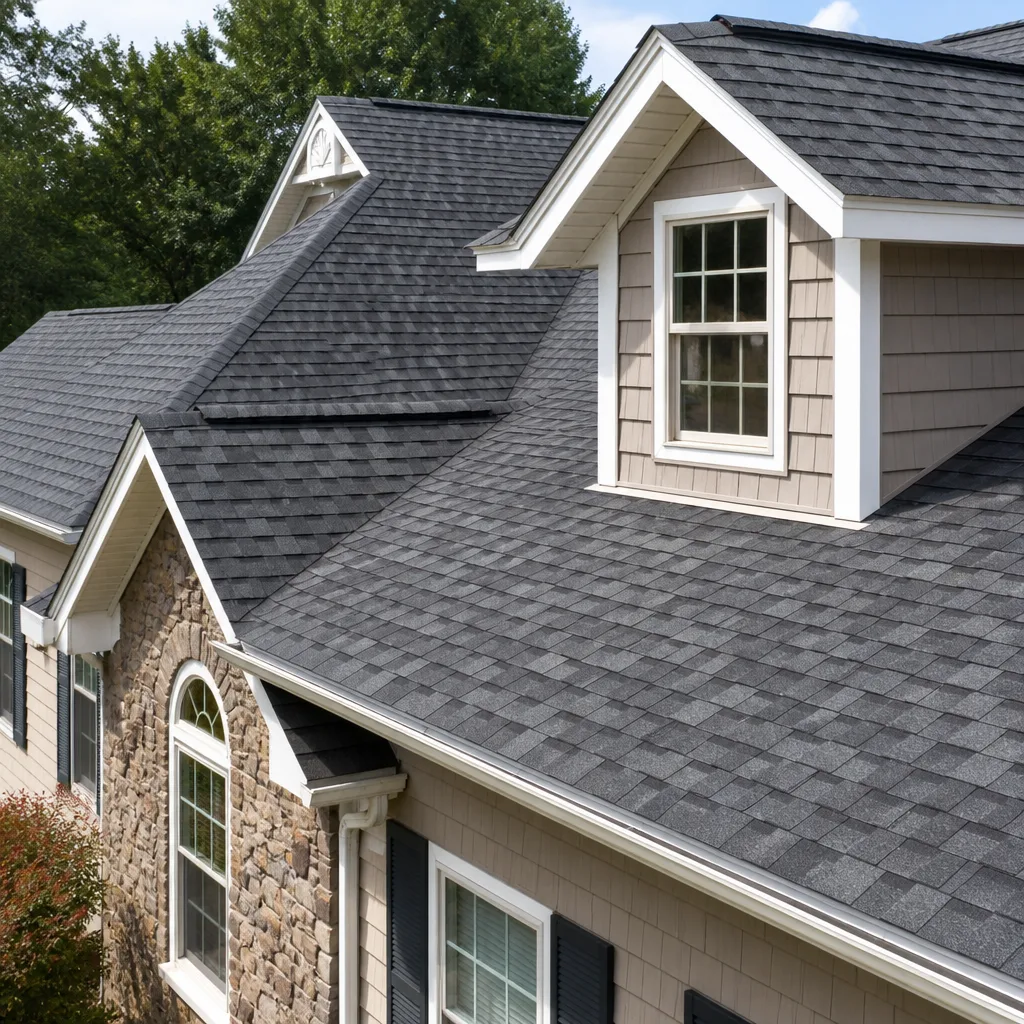 Architectural shingles
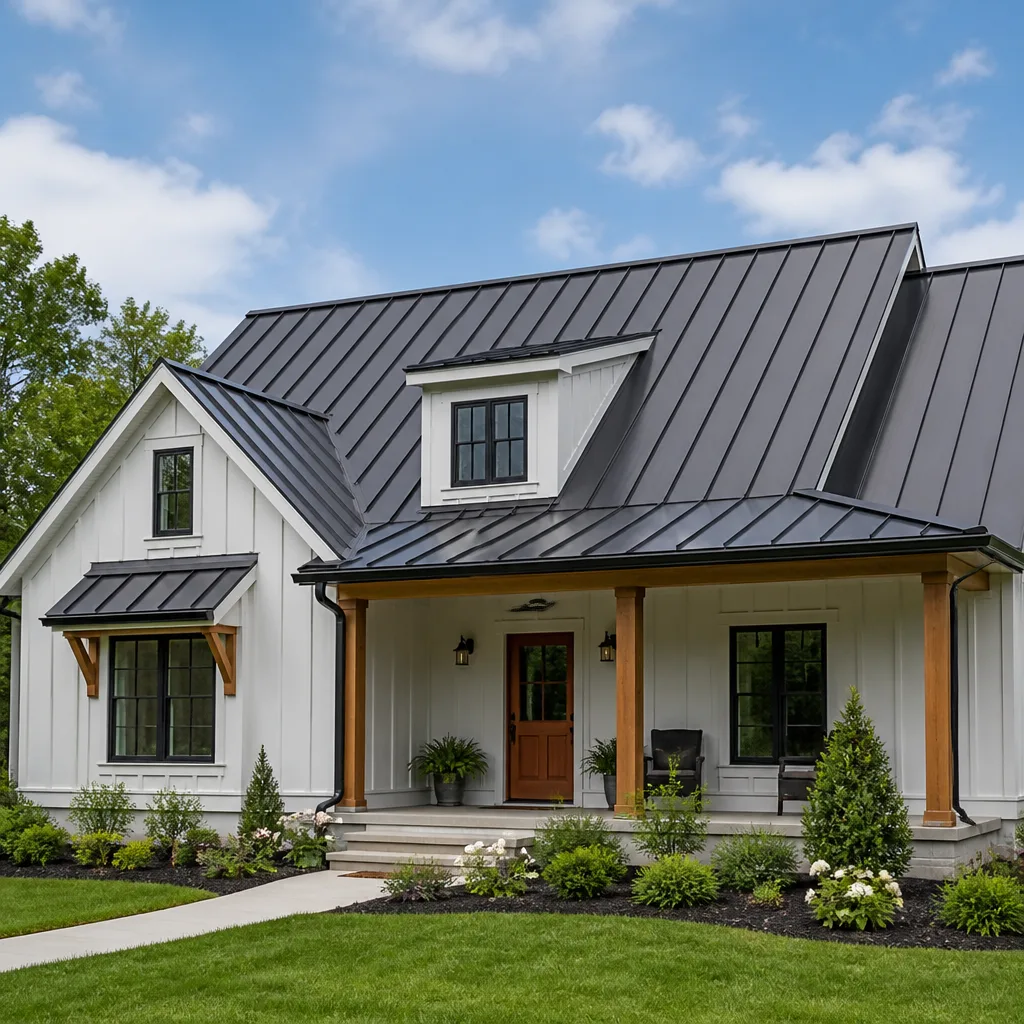 Metal roofing
 GAF
GAF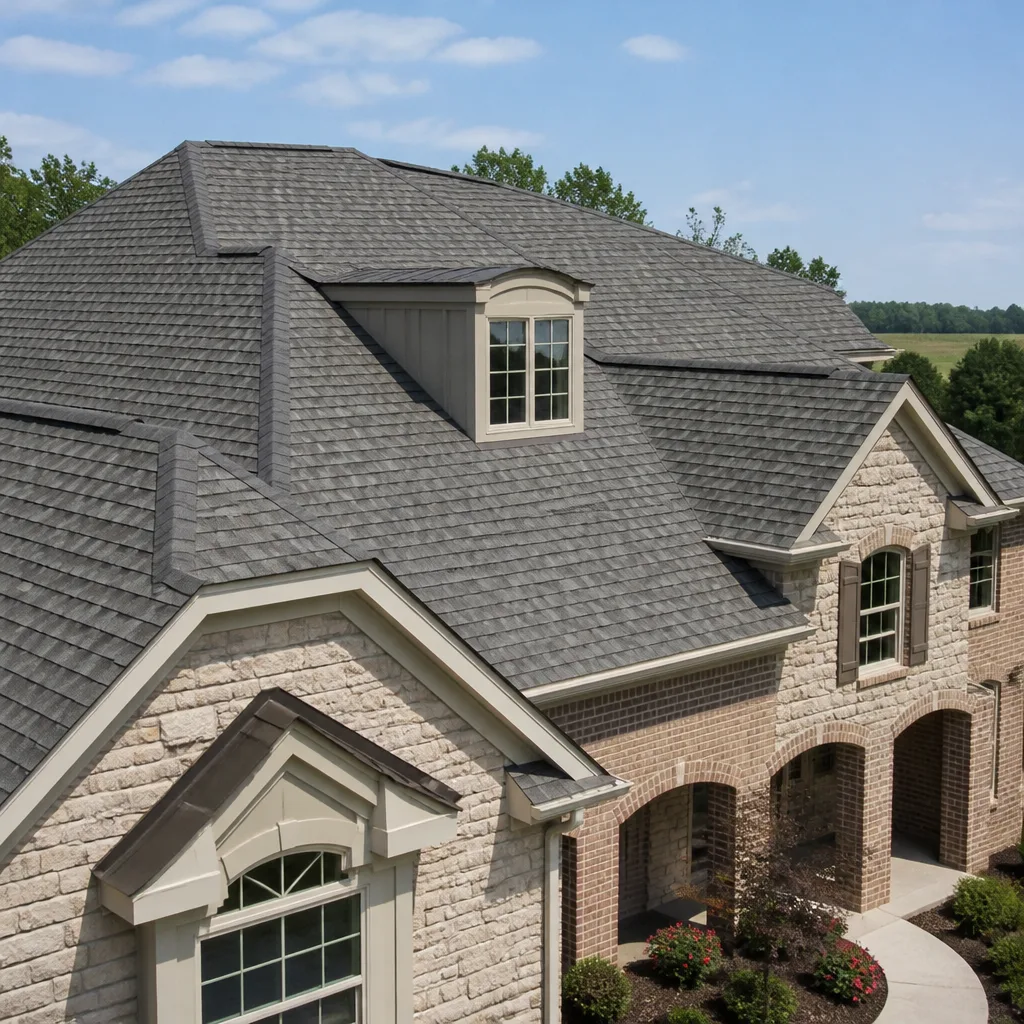 Owens Corning
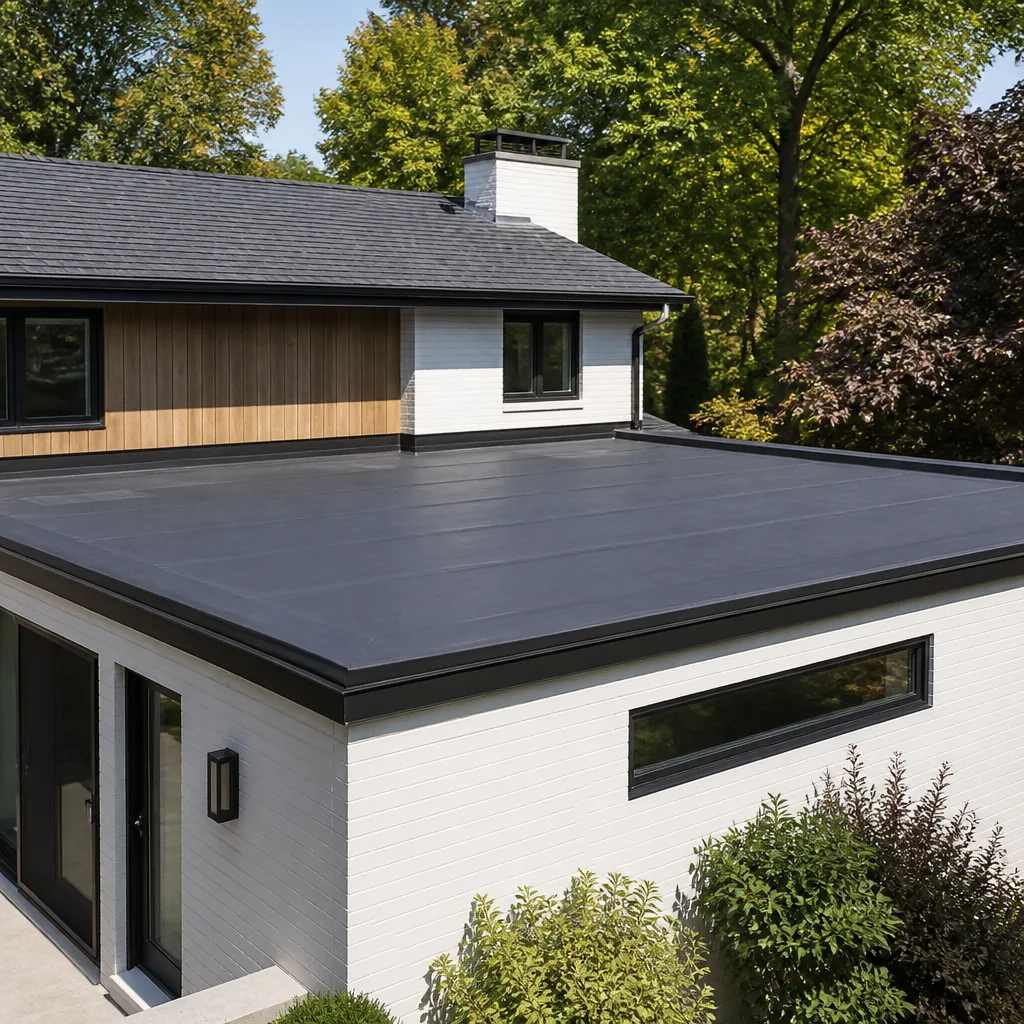 Flat & low-slope
Free roof inspection with deck photos before we talk money - GAF and Owens Corning certified installation
Tamko Flashing Replacement: The Los Angeles Owner’s Guide
Tamko flashing replacement in Los Angeles typically runs $380 to $720 installed for a standard penetration (pipe boot, vent, or valley corner), and we stock Tamko-compatible flashing on our trucks so most jobs finish same-visit. You’ll usually discover the problem one of three ways: a water stain on the ceiling after the first real rain of November, granules collecting in a gutter below a wall intersection, or an inspector’s report flagging corroded step flashing during a pre-listing roof check. Flashing fails before shingles do because it works harder: it flexes with every temperature swing and carries runoff through stress points that shingles just sit on top of.
We’re an independent Los Angeles roofing contractor, not a Tamko dealer or affiliate, which means we match the flashing to your existing roof system rather than pushing one product line.
Which Tamko Models This Applies To
The flashing on a Tamko roof isn’t always Tamko-branded, and that’s the first compatibility gotcha owners hit. Tamko manufactures shingles and underlayments; when a roofer installs a Tamko Heritage or Titan XT system in Los Angeles, the flashing is usually mill-finish aluminum or galvanized steel cut to spec on site. What ties it to your Tamko roof is the profile and the exposure, not a Tamko part number stamped on the metal.
That said, Tamko does manufacture accessory flashing products including their Proline valley metal, drip edge, and pipe boots, which ship in widths matched to Tamko’s 4-inch and 5-inch exposure profiles. If you’re replacing step flashing along a wall where the shingles have a 5-5/8 inch exposure (common on Tamko Heritage Premium), you’ll want 4-inch step flashing bent to a 2-inch wall leg; the 5-inch stock pieces leave a visible gap at the shingle butt. The quickest way to identify what you have: pull the shingle tab gently and look at the flashing height above the nail line. If it’s under 4 inches, premature wall-side leaks are a when, not an if.
For the OEM-versus-aftermarket decision: we install Tamko-branded accessories when the customer requests them specifically, but for flashing we generally recommend 24-gauge galvanized or .019 aluminum from suppliers we’ve used for years in Los Angeles. It’s heavier than the big-box mill-finish stock, it holds a bend better on steep sections, and it doesn’t cost meaningfully more on a repair-level job.
Styles & brands we work with
Signs Your Tamko Flashing Replacement Is Failing
- Ceiling stains in the room below a plumbing vent, chimney, or wall-roof intersection. A pipe boot’s rubber collar cracks from UV exposure and thermal cycling; once the neoprene splits at the pipe, water rides straight down the vent stack. By the time the stain appears, the boot has been leaking for weeks.
- Granules or small shingle fragments piling in a valley or behind a chimney. When flashing rusts through or lifts, wind-driven rain gets under the shingle edges and erodes the sealant strip. The shingles start to shed granules into that same path the water takes, so the pile sits oddly specific to the failure point.
- Dark streaks or mineral staining running down a stucco wall just above the roofline. That’s water that got behind the step flashing and is bleeding minerals out of the stucco. The flashing isn’t just letting water in; it’s also trapping moisture against the wall assembly, which is the start of rot in the sheathing.
- Daylight visible in the attic at the rake edge or under the ridge. Drip edge and ridge flashing in Los Angeles get worked hard by the west-facing sun. Once they warp or tear loose in a Santa Ana wind event, you can usually see the gap from inside before you see it from the ground.
- Lifted or flapping flashing at any transition, especially after a windstorm. Flashing that moves is flashing that’s lost its fasteners or its bed of sealant. Left alone, wind-driven rain in Los Angeles winters will work into the gap within the first couple of storms.
See the difference
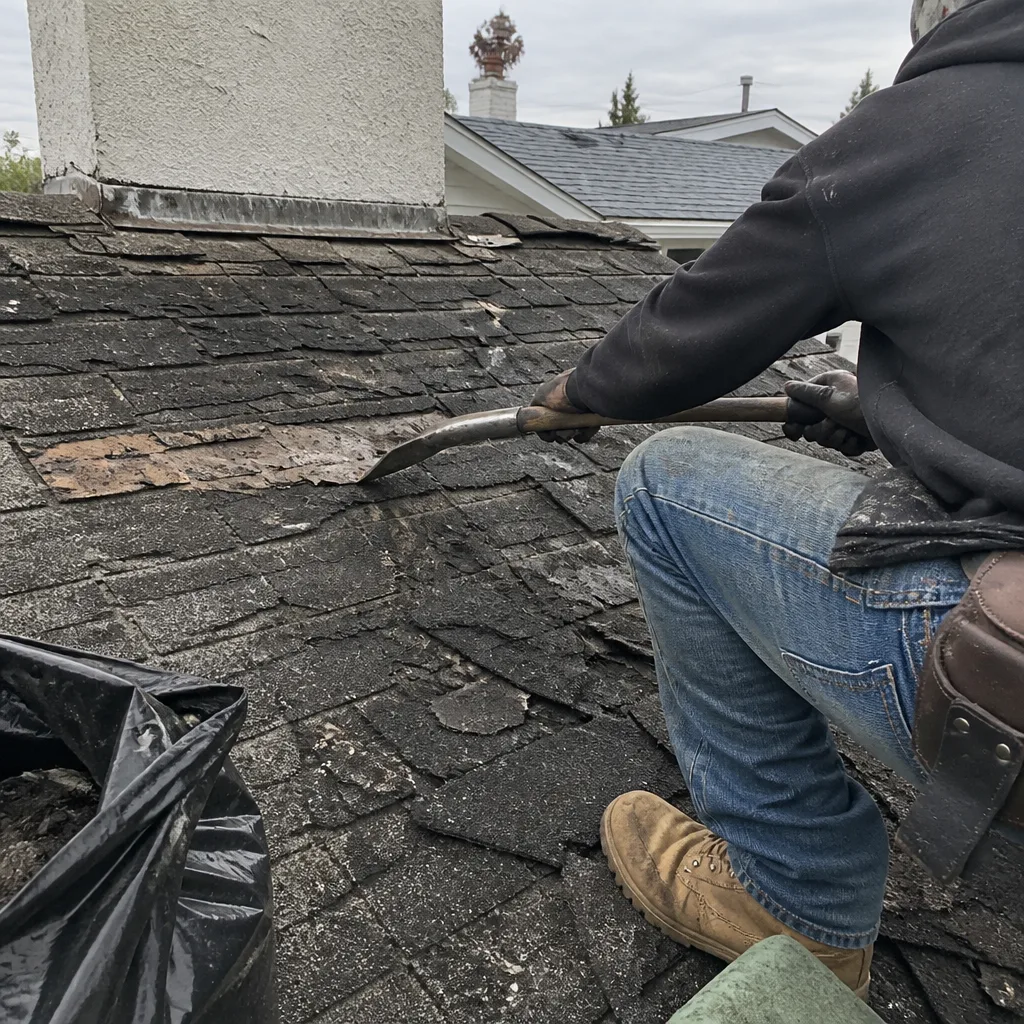 Before
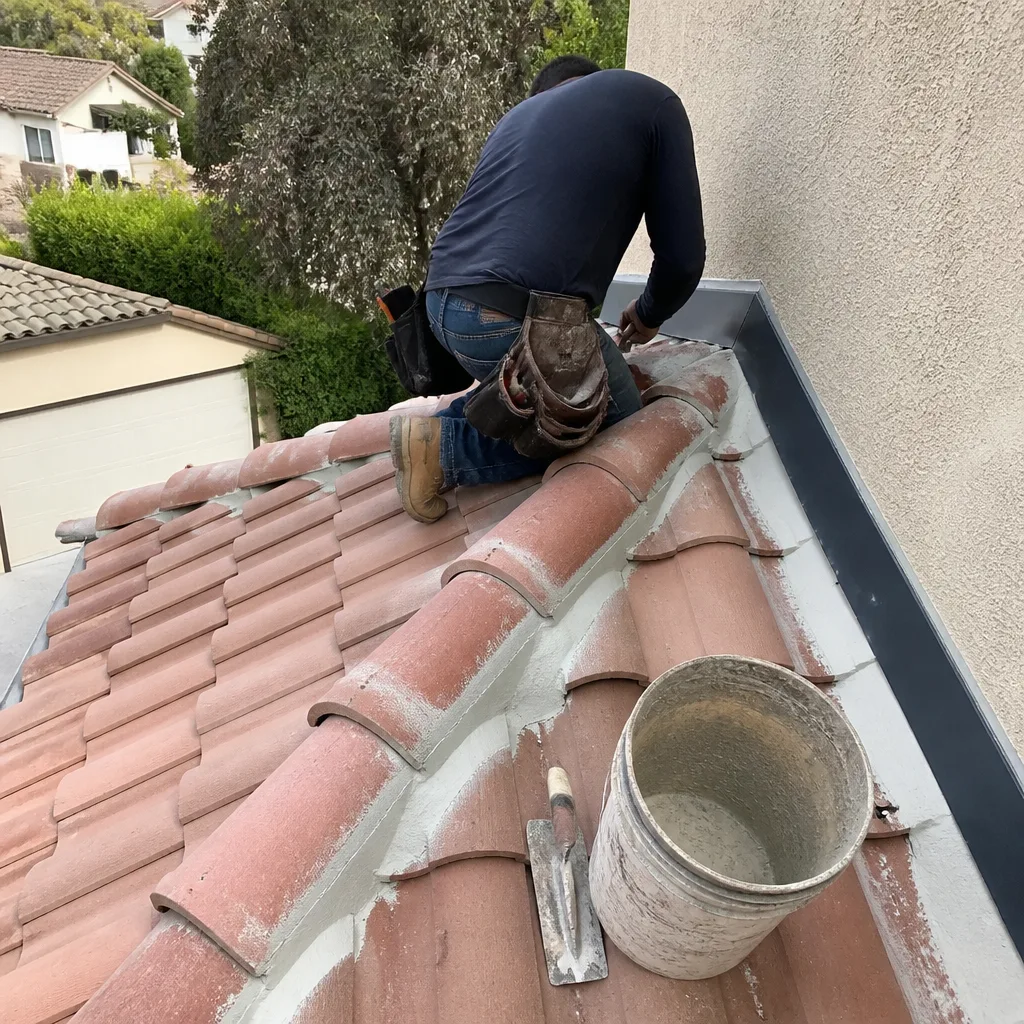 After
After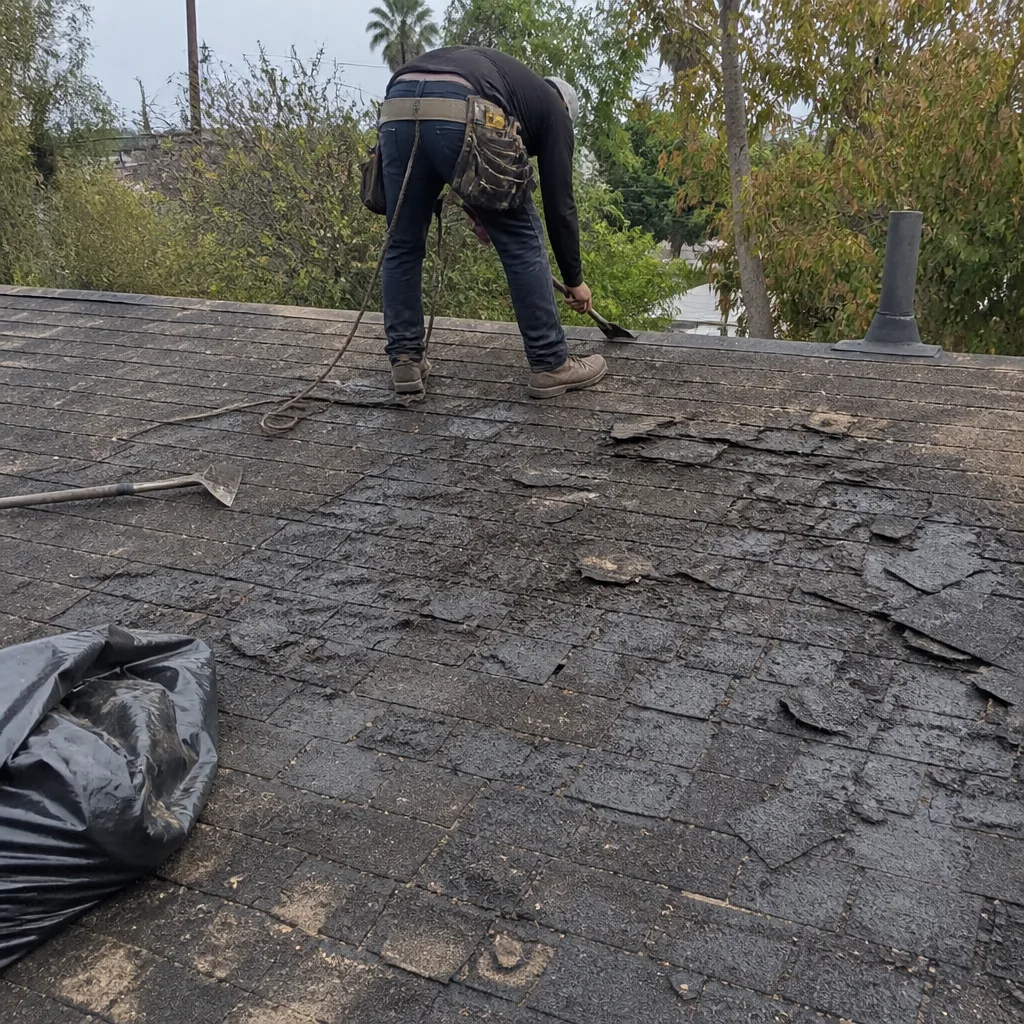 Before
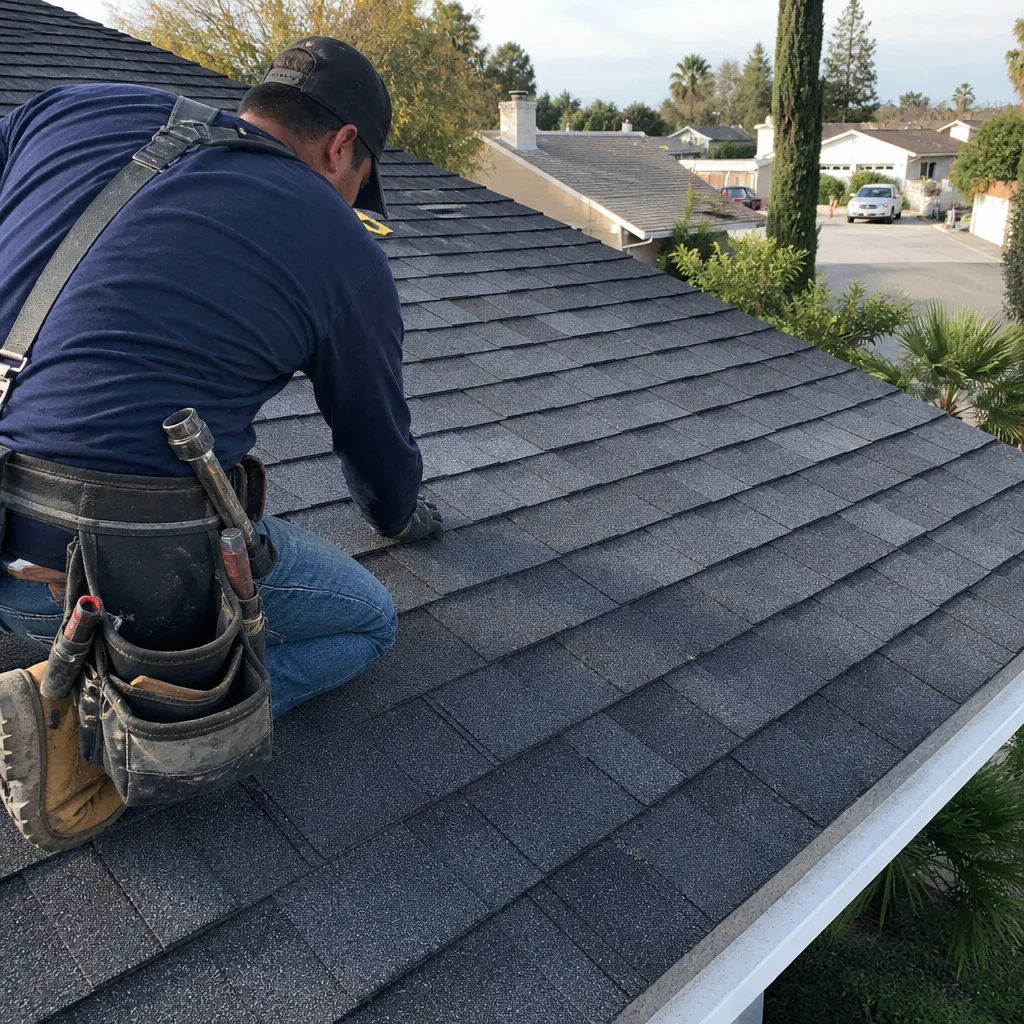 After
After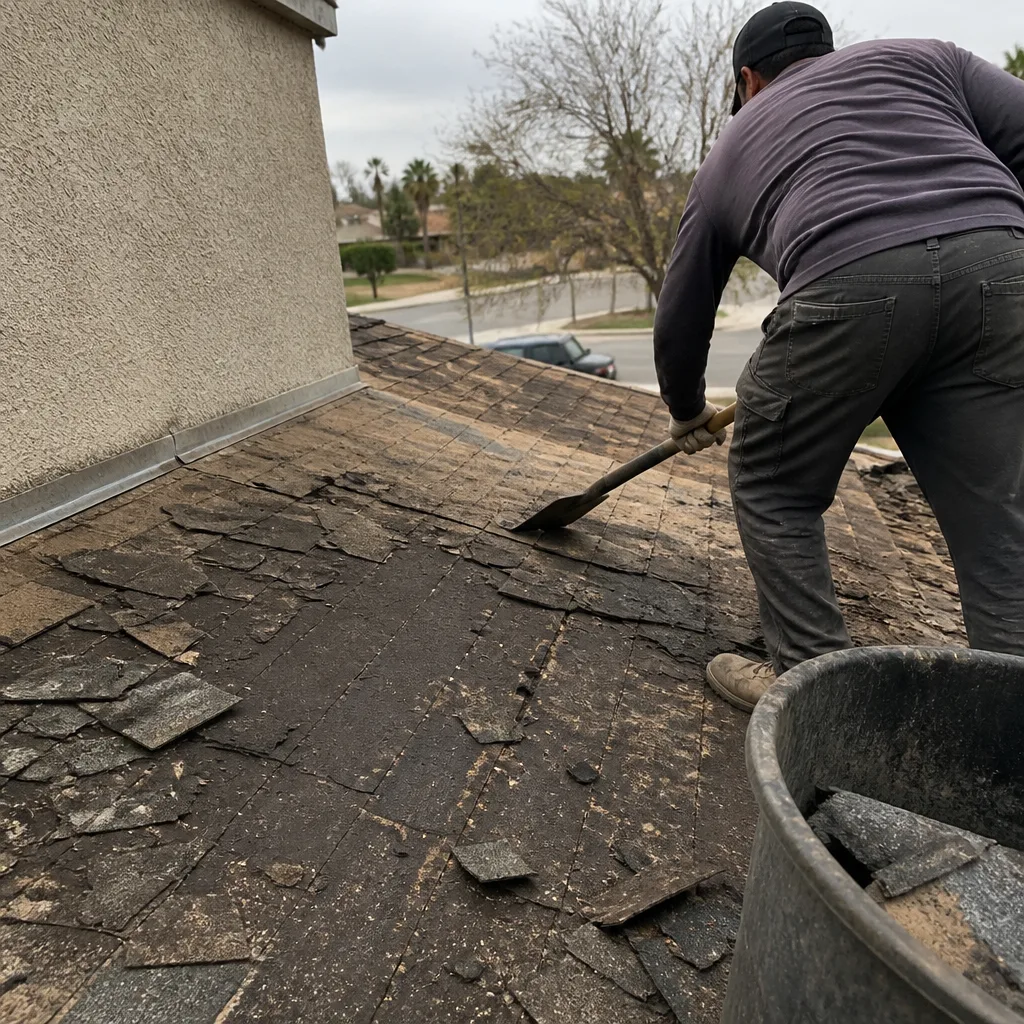 Before
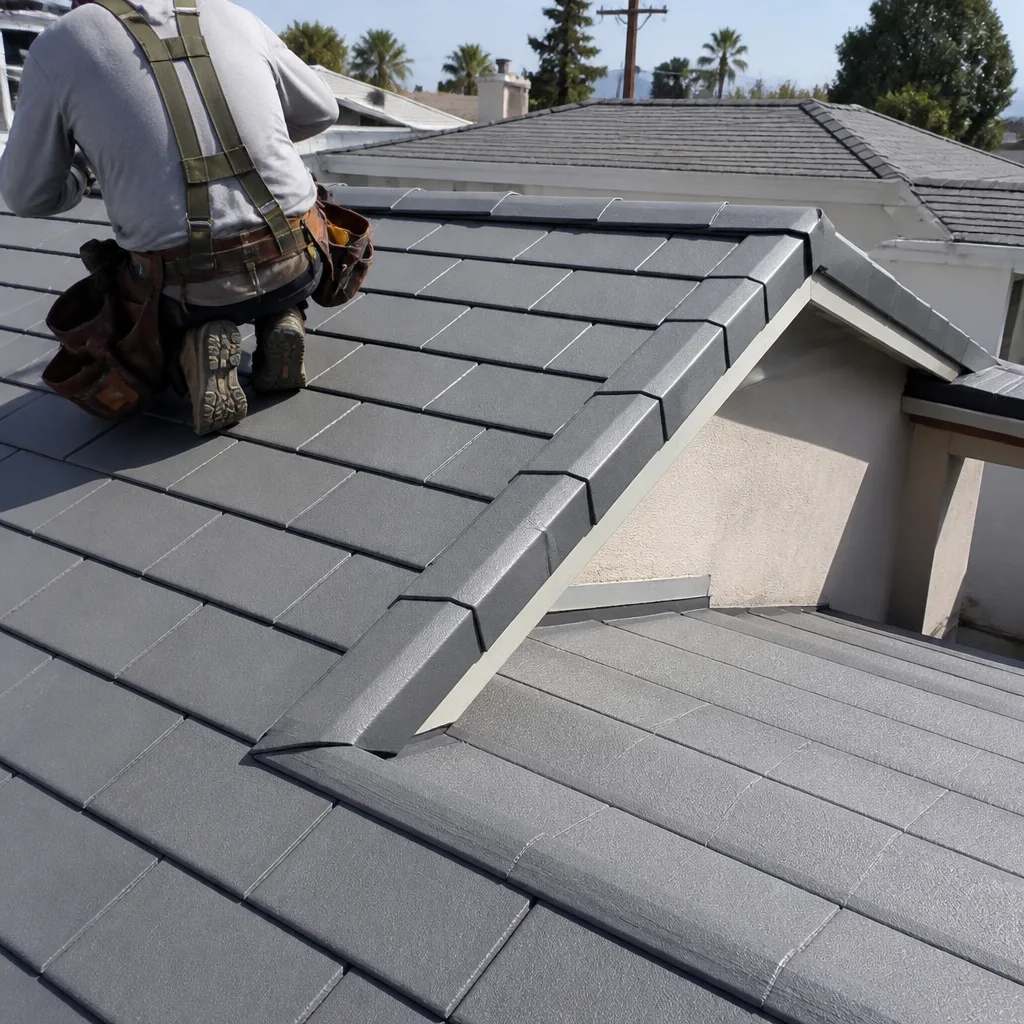 After
AfterReplacement Cost & What’s Included
For Los Angeles homeowners, Tamko flashing replacement typically lands between $380 and $720 installed when we’re addressing a single penetration or a short run of step flashing under 12 lineal feet. A full chimney re-flash with new counter-flashing and reglet work runs $1,200 to $2,400 depending on chimney height and access. A valley replacement, which means pulling shingles back on both sides and re-laying them, runs $800 to $1,400 per valley.
What drives the range: whether the decking underneath has rotted (we’ll show you before replacing it), roof pitch and story height, and whether the old flashing comes out clean or fights us. Every quote includes written line-item pricing before any work starts, and the crew leaves the written guarantee with you before driving away. If a repair fails inside a year, we’re back at no charge under the 365-Day Done Right Promise. That’s not a warranty card you file; that’s a documented commitment you hold from day one.
DIY or Call Us?
There’s an honest split here. You can absolutely check for the failing flashing yourself: from the attic, from a ladder at the eave, or from the ground with binoculars. You’re looking for cracked rubber at the pipe, rust blooms at the fasteners, or metal that’s lifted at the edges. What you shouldn’t do is pull shingles and re-secure flashing as a weekend project on a Los Angeles roof unless you’ve done it before: the flashing has to lap specific directions, the fasteners need to hit the nail line, and the sealant bed needs a clean dry surface to bond to.
Roof work carries real risk beyond the repair itself. If your roof is more than one story or the pitch is steeper than a gentle slope, call a pro with fall protection and the insurance to back it. If you’ve spotted a failed pipe boot or lifted flashing and want an exact price, call (213) 674-2890. Tell you the price before we touch the roof, that’s the only way we know how to start.
FAQs
Most flashing on a Tamko roof in Los Angeles lasts 15 to 20 years before the sealant joints open up and the metal starts to fatigue, but UV exposure and salt air near the coast can shorten that to 12 years on the west and south faces. The shingles above it may still have life left, which is exactly when a flashing-only replacement makes sense.
Small failures, like a loose fastener or a dried sealant line, can be repaired with new sealing and fasteners if caught early with no water damage underneath; once the metal is corroded through or lifted along its full length, replacement is the only repair that holds. We’ll show you the condition before recommending which way to go.
A standard pipe boot or vent flashing swap takes 45 minutes to an hour once the crew is on the roof; a step flashing run under 12 lineal feet runs about an hour and a half; a full chimney re-flash is a half-day job. We schedule a window and show up in it.
We stock Tamko-compatible pipe boots, step flashing, drip edge, and valley metal in the gauges and profiles needed for Tamko roof systems in Los Angeles, along with parts for GAF, Owens Corning, and CertainTeed installations. If the match requires a Tamko accessory we don’t carry, we order it and typically have it within two business days.
If you’re seeing water where it doesn’t belong, or an inspector flagged flashing on a home you’re buying or selling, call (213) 674-2890 for a free estimate. We’re Tilehurst Roofing Los Angeles, part of the Kingswell family of roofing companies, founded in 2000, and we’ve worked roofs across Los Angeles County for over a decade. Greg Holloway, our owner, learned the trade at Los Angeles Trade-Technical College and grew up in the Valley; he still checks the flashing first, because that’s what the roof checks first.
Written by Greg Holloway, Owner, Tilehurst Roofing Los Angeles at Tilehurst Roofing Los Angeles, serving Los Angeles and nearby areas.