
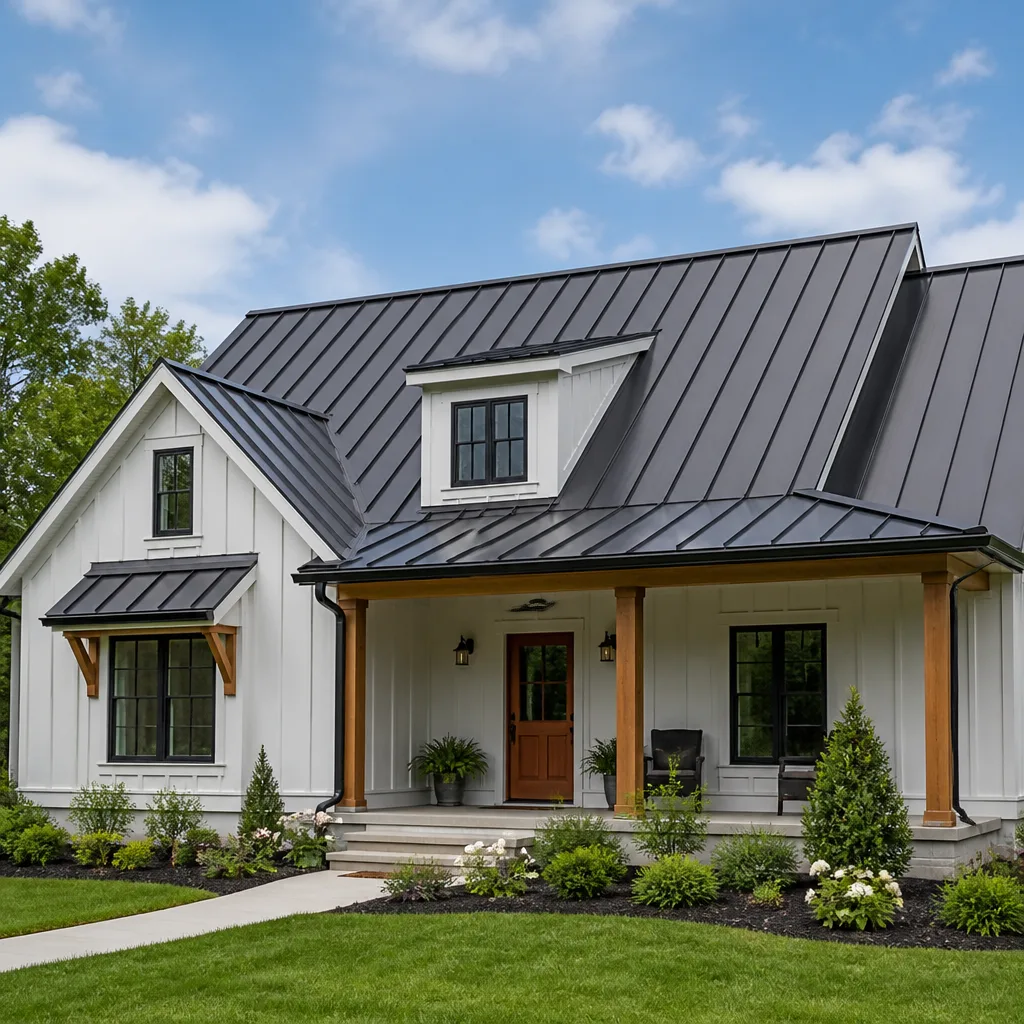
 Metal roofing
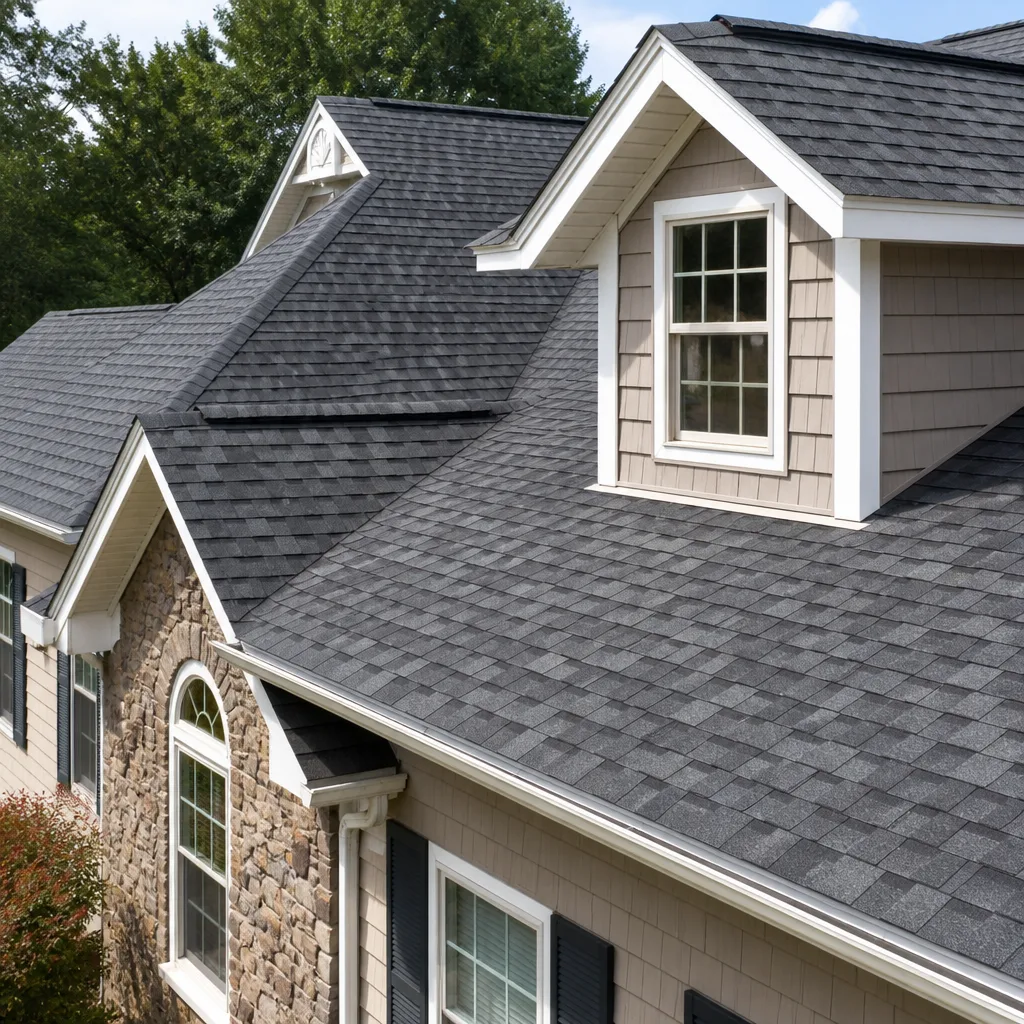 Architectural shingles
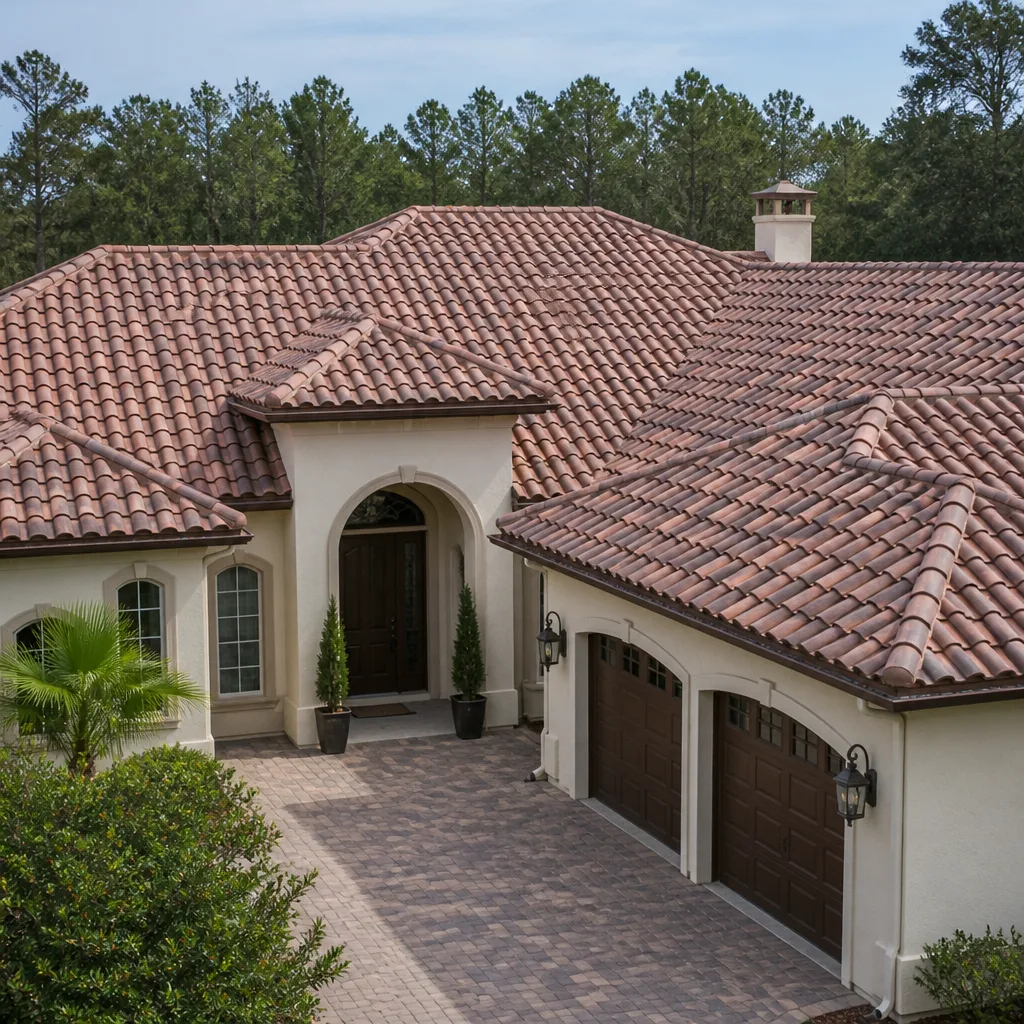 Tile roofing
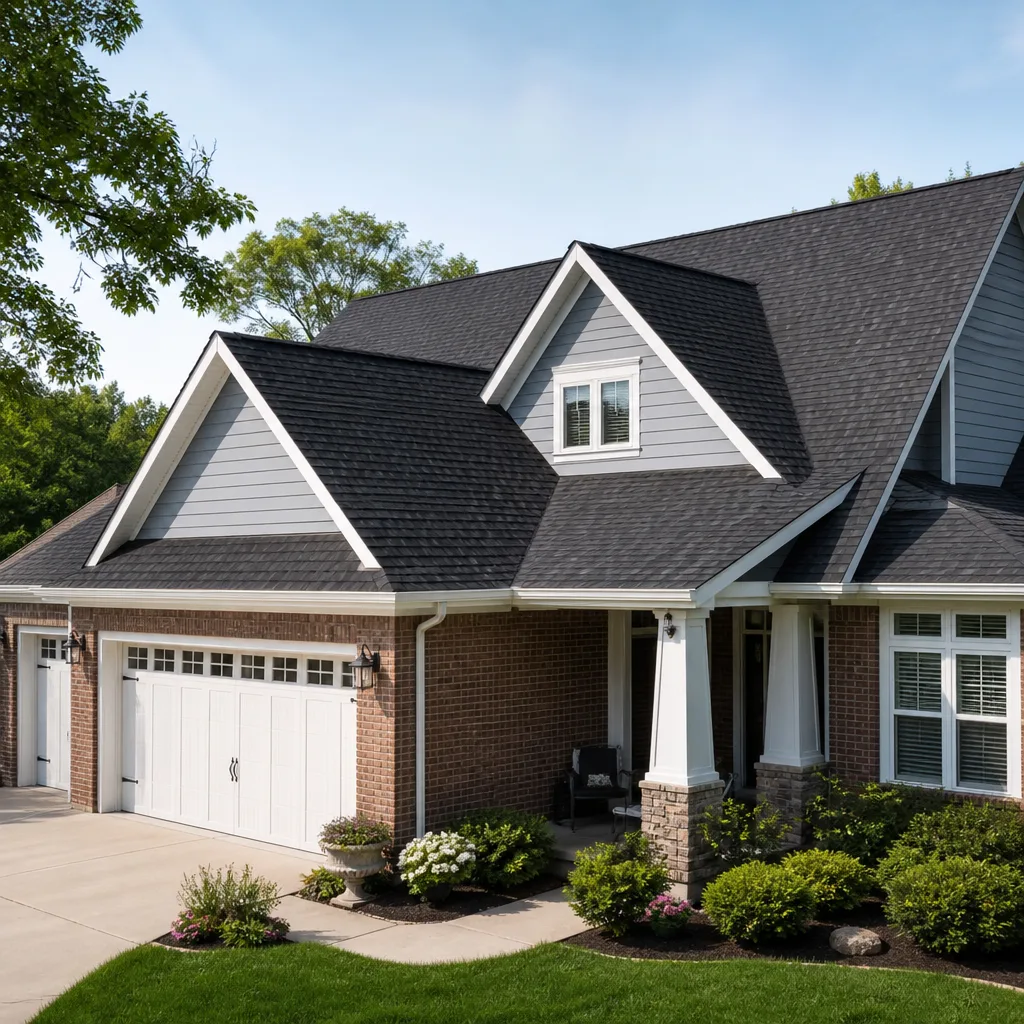 GAF
GAF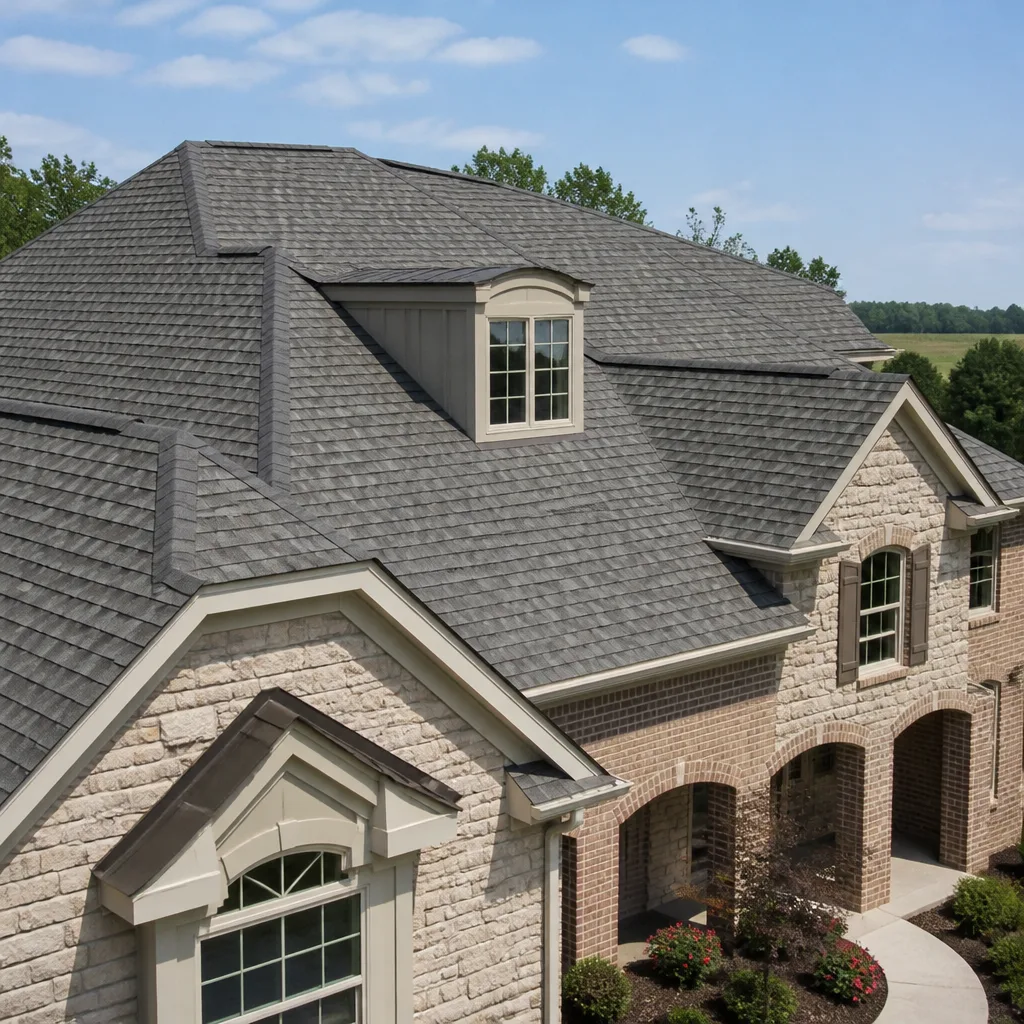 Owens Corning
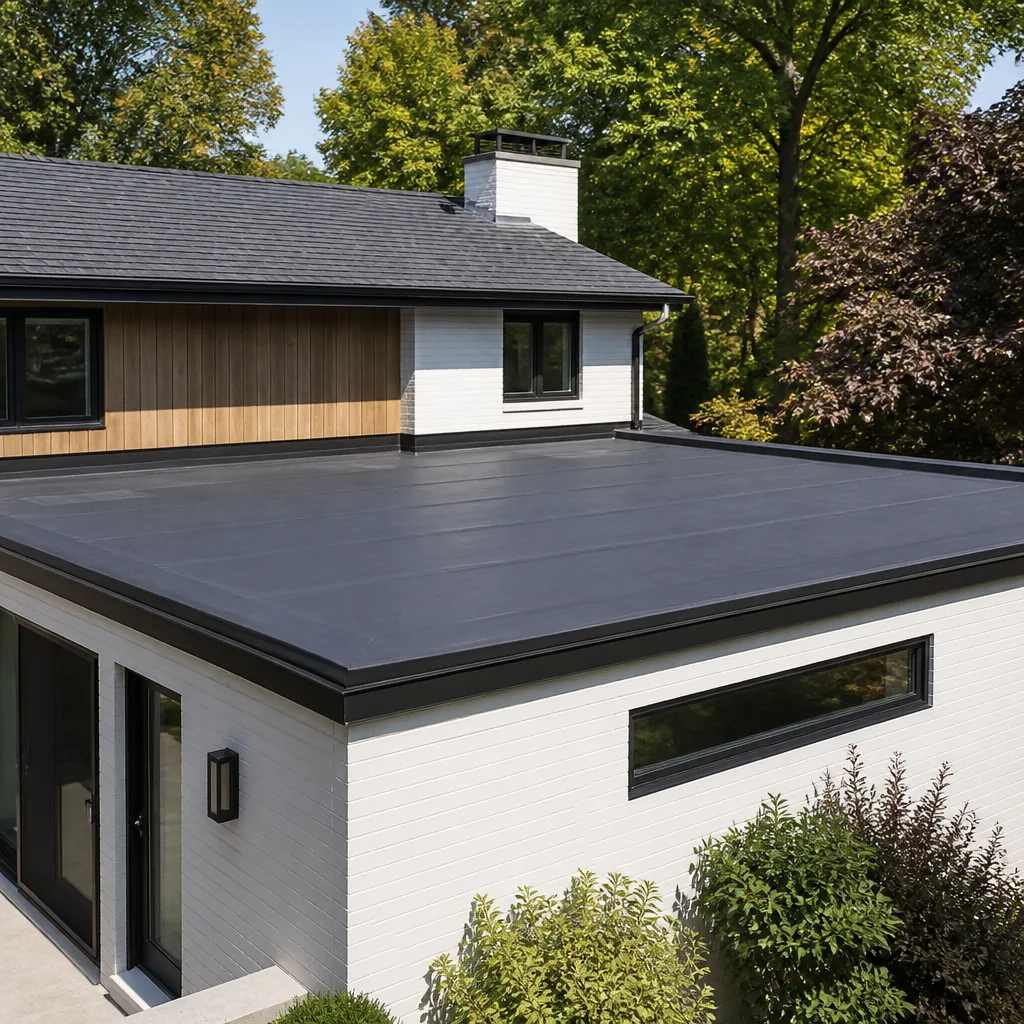 Flat & low-slope
Free roof inspection with deck photos before we talk money - GAF and Owens Corning certified installation
Styles & brands we work with
See the difference
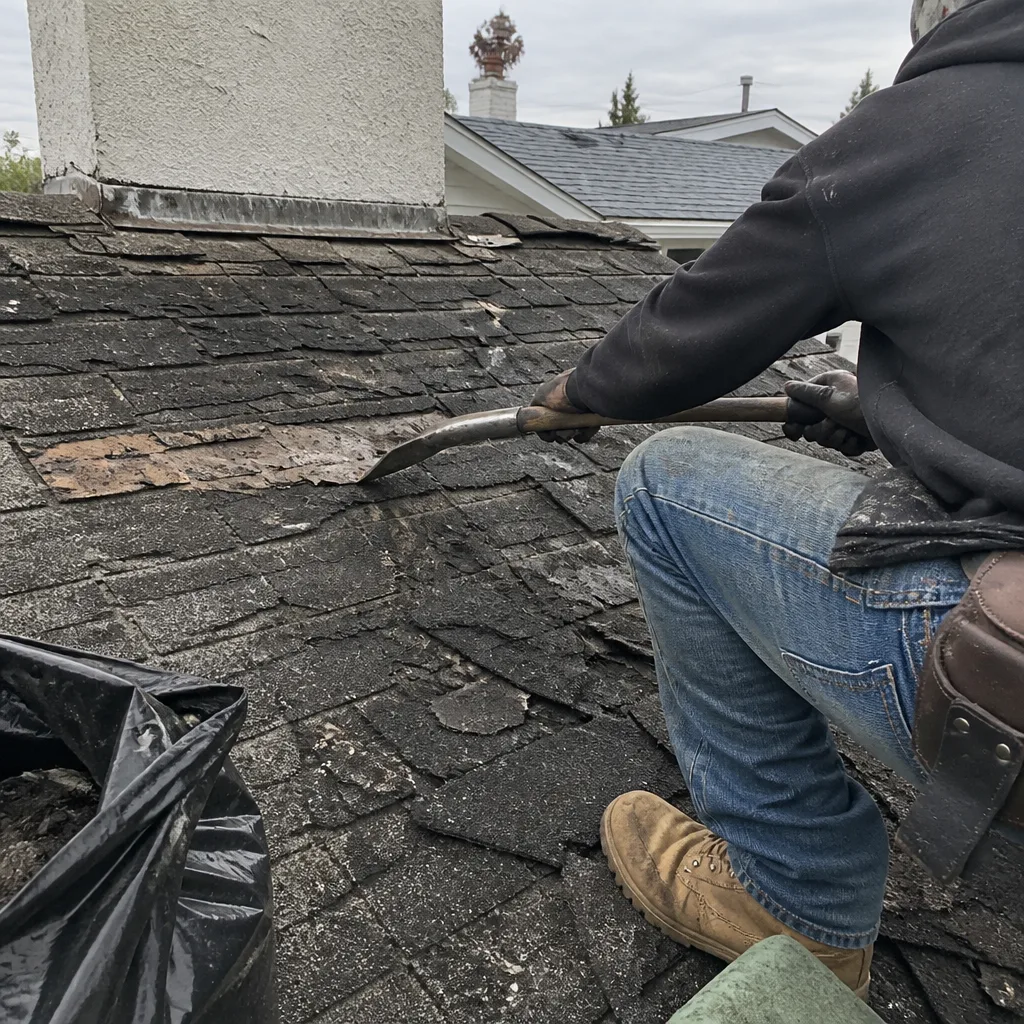 Before
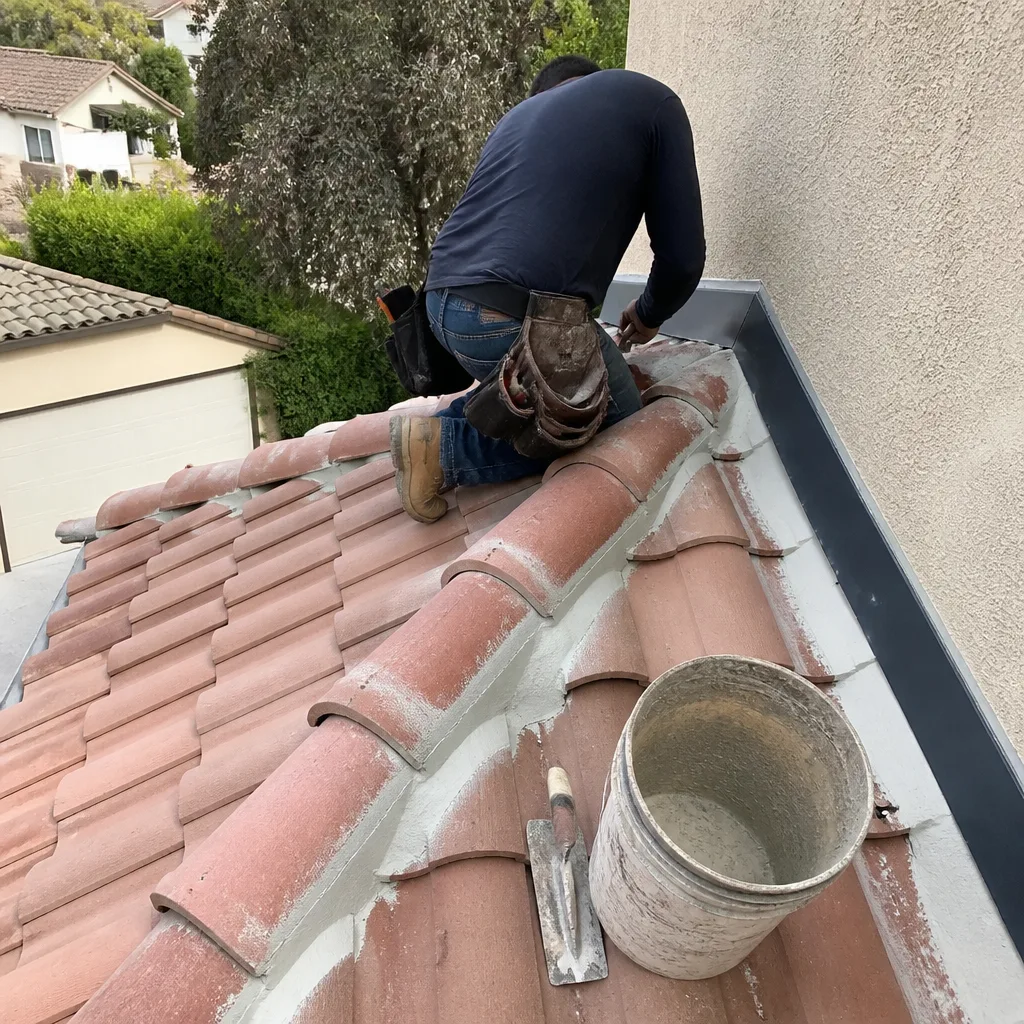 After
After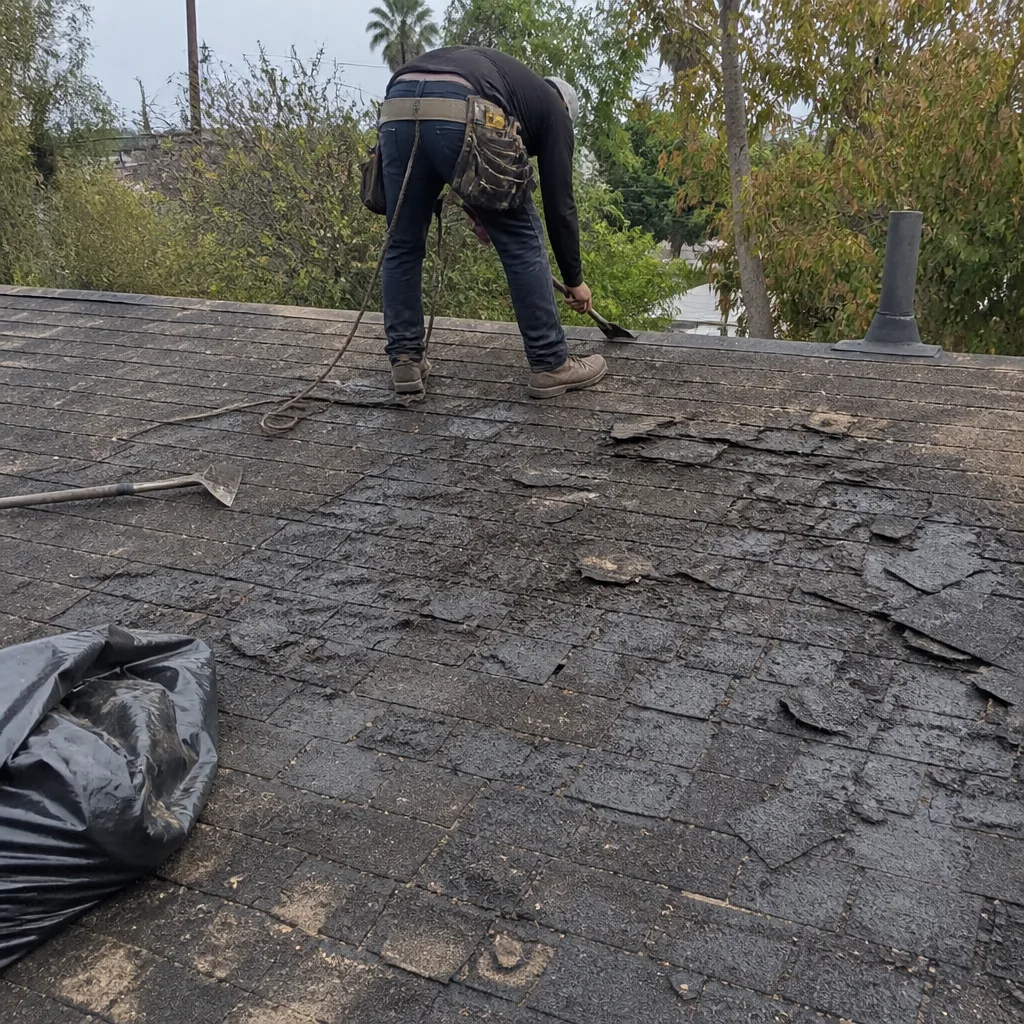 Before
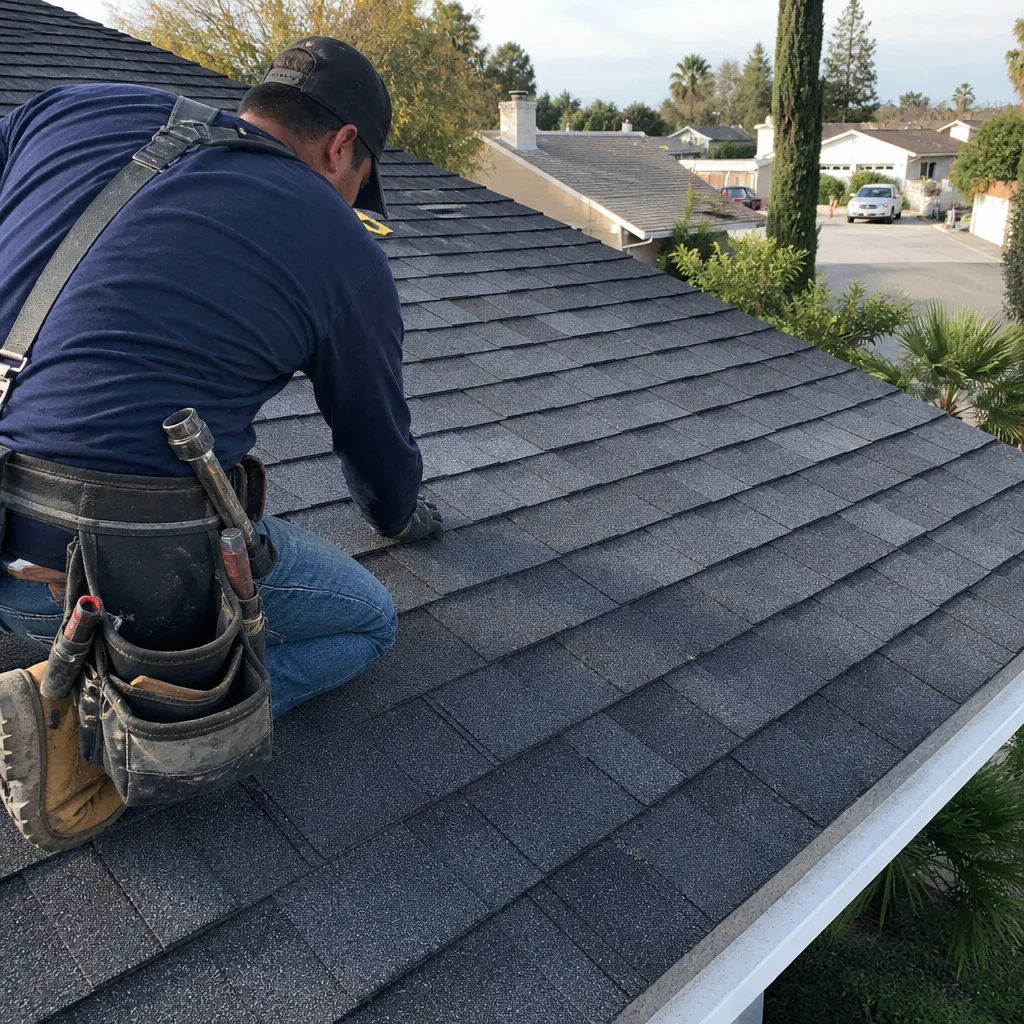 After
After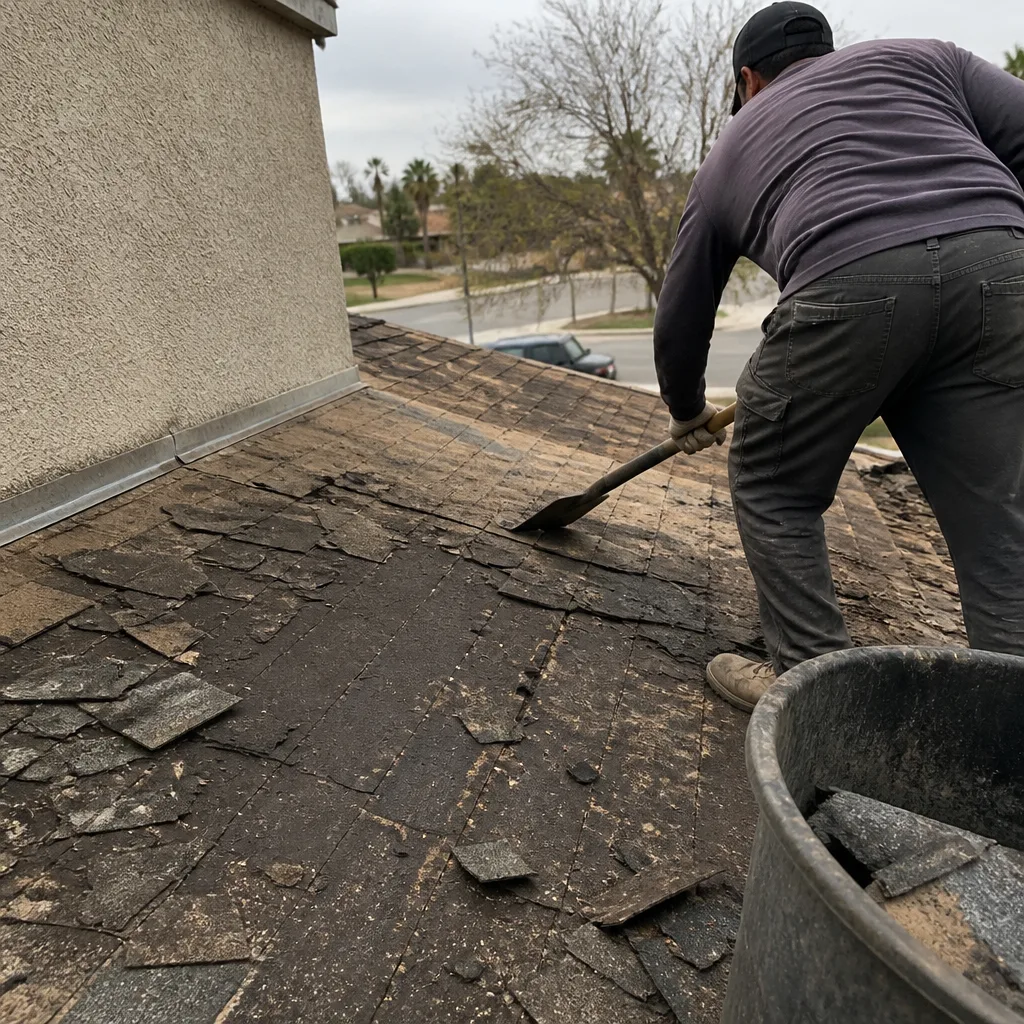 Before
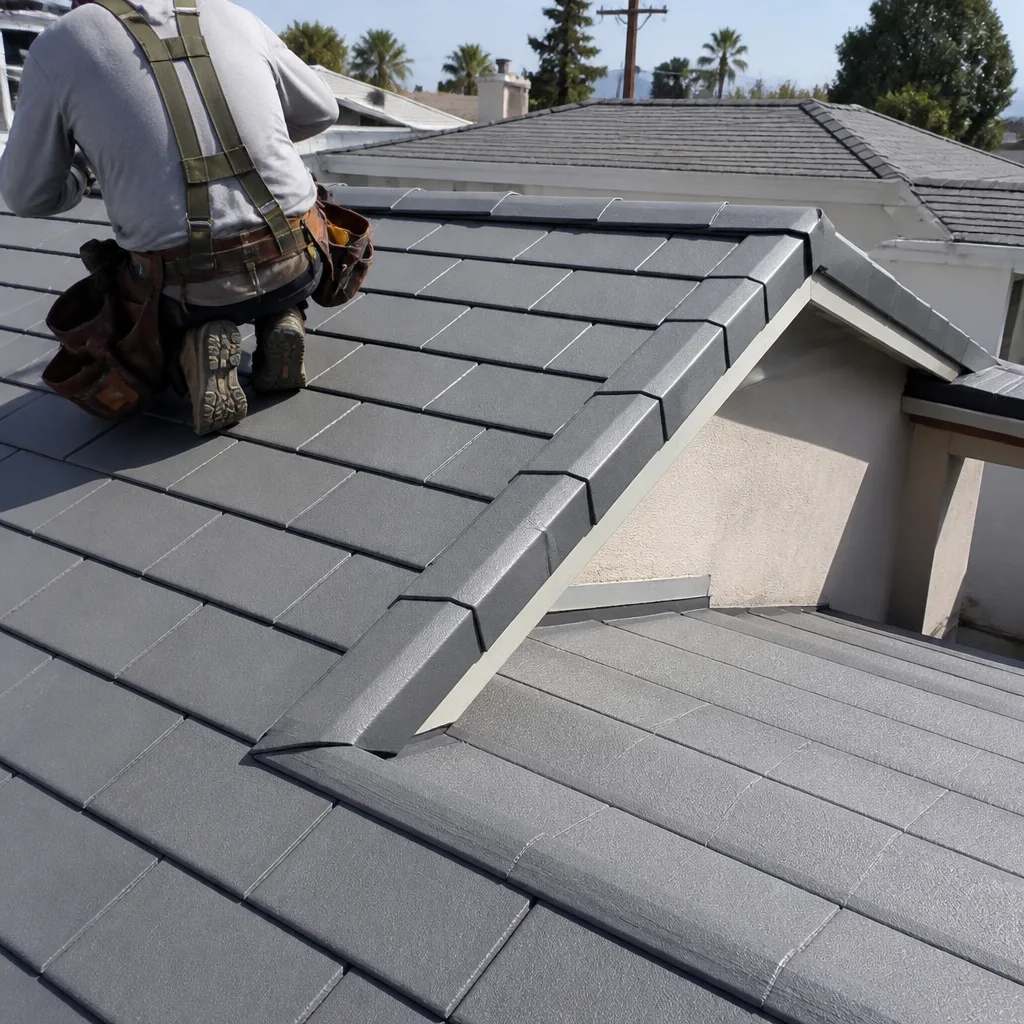 After
AfterHow Much Does Metal Roof Installation Cost in Los Angeles?
Metal roof installation in Los Angeles typically costs between $14,500 and $38,000 for an average 1,700-square-foot home in 2026, with most homeowners paying around $22,000. On a per-square-foot basis, expect to pay $8.50 to $22.00 depending on the metal type, profile, and complexity of your roof. The final number swings on three things: the material you pick (steel is cheapest, copper is a luxury purchase), how complicated your roofline is, and whether the old roof needs to come off first.
If you’re comparing that against asphalt shingles, which run $8,000 to $14,000 for the same house, metal looks expensive. But asphalt lasts 15 to 20 years in LA’s sun. A standing seam metal roof lasts 40 to 60 years, and many manufacturers warrant their panels for 30 to 50 years. You’re paying once instead of two or three times. That matters when you plan to stay in the house.
Tilehurst Roofing Los Angeles has been installing metal roofs across the LA basin since our founding in the Kingswell family of roofing companies in 2000. We give every homeowner a written price before any work starts, and that number doesn’t change when the crew shows up. Greg Holloway, who leads our LA team, put it simply: the price on the paper is the price on the invoice. No exceptions, no end-of-job surprises.
Want a real number for your roof? Call (213) 674-2890 and we’ll walk the roof, take measurements, and hand you a written estimate, free. No high-pressure pitch, no “today only” discount. Just a price you can compare against anyone else in Los Angeles.
Metal Roof Installation Cost Breakdown (2026)
Here’s what a metal roof costs in Los Angeles when you break it down by component. These ranges reflect what our crews see on real jobs across the city in 2025 and into 2026, from Pasadena to the South Bay, the Valley to the Westside.
| Cost Component | Typical Range (Los Angeles, 2026) | Notes |
|---|---|---|
| Metal panels (materials only) | $4.50 – $14.00 per sq. ft. | Steel is lowest; aluminum mid; zinc and copper highest. |
| Underlayment | $0.75 – $2.50 per sq. ft. | High-temp synthetic is worth it in LA’s heat; peel-and-stick for valleys and penetrations. |
| Labor (tear-off included) | $3.00 – $5.50 per sq. ft. | Steep pitches and two-story homes push this up; LA labor rates are higher than national averages. |
| Old roof removal & disposal | $2,500 – $5,500 total | Depends on layers; two-layer asphalt tear-offs run higher due to dump fees at LA transfer stations. |
| Flashing, trim, ridge cap, drip edge | $1,500 – $4,000 total | Every penetration (pipes, vents, skylights) needs custom-flashed metal. LA homes with vent stacks and chimneys cost more here. |
| Decking repairs (if needed) | $600 – $2,500 | Older homes in neighborhoods like West Adams and Highland Park often have rotted sections around chimneys and eaves. |
| Permits & inspections | $500 – $1,500 | LA Department of Building and Safety permit fees plus a final inspection. Some hillside areas add additional review costs. |
So for an average single-story ranch in the San Fernando Valley, a 1,700-square-foot roof with standing seam steel, full tear-off, and new underlayment lands right around $21,000 to $24,000. The same roof on a two-story Spanish-style home in Los Feliz with multiple gables, a chimney, and complex valleys runs $30,000 to $36,000.
Here’s the part most homeowners never hear from a roofer until it’s too late: the unknowns under the old roof. Rot, cracked decking, old water damage. That’s why Tilehurst puts the price on paper after a proper inspection, and why our written price includes what we find from the ground and attic. If decking is rotted, we tell you, show you photos, and give you a price for that specific repair before we open anything up.
Material Costs by Metal Type
- Galvanized steel: $8.50 – $13.00 per sq. ft. installed. The workhorse. Good for LA’s dry climate, though coastal homes within a few miles of the beach should consider galvalume or aluminum. Salt air eats bare steel over time.
- Galvalume steel (zinc-aluminum alloy coating): $9.50 – $14.50 per sq. ft. Better corrosion resistance than galvanized. Smart choice for Santa Monica, Venice, Playa del Rey, and anywhere west of the 405.
- Aluminum: $11.00 – $17.00 per sq. ft. Lightweight, never rusts. Excellent for coastal properties. Slightly softer than steel, so hailstorms (rare in LA but possible in the foothills) can dent it.
- Zinc: $18.00 – $28.00 per sq. ft. A century-long lifespan, self-healing patina, and a price tag that makes most LA homeowners pause. Beautiful on mid-century moderns in the hills.
- Copper: $25.00 – $40.00 per sq. ft. The pinnacle for historic properties and architectural statements. Silver Lake and Hancock Park have seen a few of these; it’s a luxury product that will outlast the house.
What Affects Metal Roof Installation Pricing in Los Angeles
- Roof pitch and height. LA has everything from low-slope mid-century ranches in the Valley to steeply pitched craftsman homes in Pasadena. A 4/12 pitch is easy to work on. A 10/12 on a two-story home in Echo Park means safety harnesses, roof jacks, and slower labor. That’s real money: two-story steep roofs can add 15 to 25 percent to labor.
- Number of valleys, dormers, chimneys, and penetrations. Every time your roof changes direction, a piece of custom-cut metal has to seal that transition. Spanish-style homes in communities like El Sereno and Montecito Heights have multiple hips and valleys. A simple gable roof is three times cheaper to flash than a cut-up roof with five valleys.
- Tear-off or overlay. LA building code doesn’t allow new metal over old shingles without an approved underlayment system, and most reputable roofers won’t do it. A full tear-off adds $2,500 to $5,500, but it also gives the crew a clean deck to inspect. Skipping it hides water damage until the metal starts leaking into your ceiling.
- Coastal proximity. Homes within three miles of saltwater should use aluminum or galvalume with a marine-grade finish. That’s $2 to $4 more per square foot than standard steel, but in Venice or San Pedro, it’s the difference between a 20-year roof and a 50-year roof.
- Permit requirements and hillside zoning. Portions of Los Angeles with hillside grading ordinances (Mount Washington, Baldwin Hills, parts of Studio City) can require additional structural review and engineering sign-offs. That’s why our permit line item ranges from $500 to $1,500 instead of a flat number: the city’s process varies by neighborhood.
- Decking condition. Homes built before 1970 in neighborhoods like Westchester and Eagle Rock often have 1×6 board decking that has dried out and split over 50 or 60 LA summers. Replacing sections costs $600 to $2,500 and is one of the most common change orders on older LA homes, but it’s not an upsell. It’s a safety issue the inspector will flag anyway.
One thing that doesn’t change: we hand you a written price before any work starts. Whether your roof is a simple rectangle in Lakewood or a cut-up mess in Mount Washington, the number on that paper is the number you pay. That’s the Kingswell Way: say the price before the work, show up in the window we gave, leave the place cleaner than we found it, put the guarantee in writing, come back if it fails.
How to Save on Metal Roof Installation
Metal is a premium product, but there are legitimate ways to keep the price reasonable without compromising the roof.
- Choose exposed-fastener panels instead of standing seam. Exposed-fastener steel runs $8.50 to $11.50 per sq. ft. installed, versus $12 to $18 for standing seam. The tradeoff: exposed screws need re-torquing every decade, and the rubber washers degrade faster in LA’s UV. If you’re keeping the house forever, standing seam is worth the premium. If you’re selling in five years, exposed fastener is a defensible choice.
- Replace the roof in the off-season. LA doesn’t have a real winter, but demand for roofers drops a bit in November and December. Some crews (including ours) run tighter schedules then, and a slow week means we can often start sooner.
- Handle the decking question upfront. Ask for a decking allowance in your written estimate. We write “up to $X for decking repair at $Y per sheet” so you know exactly what rotted wood will cost if we find it. No ambush pricing, no surprise line item.
- Don’t overlay; do it once. Overlaying metal panels on top of old shingles saves the tear-off fee, but traps moisture and shortens the roof’s life in LA’s heat. The cheaper job today is the more expensive job in 12 years. We’ll tell you that even if it means we don’t get the overlay job.
- Bundle accessories and underlayment into the same job. Adding gutter replacement, new drip edge, or solar mounting brackets during installation is cheaper than retrofitting later. The crew is already on the roof with the right tools.
The best way to know your real price is to call and have us measure. Every estimate is free, and it includes a written line-item breakdown. Call (213) 674-2890 to schedule a roof walk. A live person answers, day or night, weekends included.
If you’re still exploring what metal roof installation involves before you commit, read our guide on Metal Roof Installation in Los Angeles. It covers panel profiles, underlayment choices, and what to expect during a typical install. And if you want to return to the home page to browse all services, that’s there too.
FAQs – Metal Roof Installation Cost in Los Angeles
How much does a metal roof cost per square foot in Los Angeles in 2026?
Installed metal roofing in Los Angeles runs $8.50 to $22.00 per square foot in 2026, depending on material. Galvanized steel sits at the low end ($8.50 to $13.00 per sq. ft.), aluminum in the middle ($11 to $17), and zinc or copper at the top ($18 to $40). The per-square-foot number includes panels, underlayment, labor, standard flashing, and tear-off on a simple roof. Complex roofs push the effective rate up because trim and flashing work increases. For an exact number on your roof, call (213) 674-2890 and we’ll give you a free written estimate.
Is a metal roof worth the extra cost over asphalt shingles in Los Angeles?
A metal roof costs $14,500 to $38,000, while asphalt shingles run $8,000 to $14,000 for a comparable LA home. The metal roof lasts 40 to 60 years; asphalt lasts 15 to 20 in Southern California sun. Over 40 years, you’ll replace an asphalt roof two or three times. Metal also reflects more heat, which lowers attic temperatures on single-story Valley homes by 20 to 40 degrees in summer. Call (213) 674-2890 and we’ll walk you through the long-term math for your specific roof.
Can you install a metal roof on my existing roof without a tear-off?
Most LA municipalities will not permit a metal roof in 2026 that’s installed over deteriorated asphalt shingles without a separation layer, and we don’t recommend it. A tear-off adds $2,500 to $5,500 to the job, but it exposes dry rot and cracked decking before they leak into your house. Some cases allow a batten system over existing shingles, which runs $1 to $2 per sq. ft. for the battens and offsets some tear-off cost. We’ll tell you if your roof qualifies. Call (213) 674-2890 for a free inspection.
How long does metal roof installation take in Los Angeles?
Most metal roof replacements in Los Angeles take 3 to 7 working days, depending on the roof size and complexity. An average 1,700-square-foot ranch with a simple gable roof is a 3- to 4-day job. A two-story home with multiple valleys, dormers, and a chimney takes 5 to 7 days. Our crew shows up in the window we gave, works clean, and leaves a magnet sweep across the yard to pick up stray fasteners. Call (213) 674-2890 to schedule a walk and get a timeframe for your roof.
What’s the cheapest metal roof option that still holds up in Los Angeles?
Exposed-fastener galvanized steel at $8.50 to $11.50 per sq. ft. installed is the most affordable metal roof for LA homeowners, but it requires fastener re-torquing every 10 to 15 years as the rubber washers wear in the heat. We recommend it for smaller homes, ADUs, and rental properties where upfront cost matters most. Your written estimate will include both exposed-fastener and standing seam options so you can see the price difference side by side. Call (213) 674-2890 and we’ll prepare both numbers.
Get Your Written Metal Roof Estimate in Los Angeles
If you’ve read this far, you’re serious about putting a metal roof on your Los Angeles home. Good. That’s the kind of homeowner we like to work with: someone who wants the real numbers, not a sales pitch.
Call (213) 674-2890 and we’ll schedule a time to walk your roof, take measurements, check the decking from the attic, and talk through your material options from GAF, CertainTeed, Owens Corning, IKO, Atlas, Tamko, and Boral. You’ll leave with a written price in your hands. Live people answer our phones 24 hours a day, 7 days a week, including evenings and weekends. No voicemail, no callback queue, no waiting until Monday.
Every metal roof we install carries the 365-Day Done Right Promise. If it’s not right, we make it right for a full year. That’s in writing, on your estimate, before a single nail goes in.
Pricing reflects the Los Angeles market as of 2026. Tilehurst Roofing Los Angeles offers free estimates – call (213) 674-2890.
Written by Greg Holloway, Owner at Tilehurst Roofing Los Angeles, serving Los Angeles since 2000.
What Our Customers Say
"Full replacement after the last hail storm. They wrote up everything, worked with my insurance, and the crew cleaned the yard so well I couldn't find a single nail. Done in two days like they said."
- Lauren Petrakis"Small leak around the chimney flashing. They sealed it properly and it's held through a wet winter. Didn't push me toward a whole roof like the last outfit tried to."
- Bernard Oakes"They repaired a spot that another company had "fixed" twice. Tilehurst found what the others missed and it finally stopped leaking. Should have called them first."
- Denise Ackerman